
News this week included: an editorial by The Straits Times (thank you) calling for the Leader of the Opposition appointment rules to be formalised; a worrying trend of property agents putting up fake listings to lure buyers; illegal adoptive babies being smuggled from Indonesia; more young adults being diagnosed with cancer; HOME reiterating concerns over predatory recruitment practices trapping migrant workers in debt; Anthony Chen’s “We Are All Strangers”, the first Singaporean film to compete for the Berlinale’s Golden Bear; and Ratna Damayanti Taha, Epigram Book Prize winner.
Below are the issues we chose to explore in more depth.
Our picks
Society: When growth outpaces community
Cutthroat competition corrodes cohesion. This was the core argument of one of the most revealing talks at Singapore Perspectives, the annual powwow organised by the Institute of Policy Studies (IPS), a government-adjacent think tank within NUS. Sociologist Vincent Chua charted 21,000 Singaporeans’ feelings of hope, community, and national pride in nine “waves” between 2001 and 2023, mapping them against three key drivers of competition: immigration, inflation, and inequality. Immigration, so it goes, pits people against each other for jobs, transport, and healthcare; inflation makes them compete to stay afloat; inequality stokes resentment (and perhaps the desire to get ahead with little regard for others).
All three surged during the “growth at all costs” decade from 2001 to 2011, pushing cohesion to a nadir until a sharp electoral setback forced the PAP to dam immigration and embrace redistribution. As the big three eased, competition softened and that frayed sense of Singaporean-ness partly recovered. Redistribution has expanded since 2019—lately via the administration’s “VCR” path—further narrowing income inequality. But immigration and inflation have risen again; Chua’s data shows a parallel rise in resentment, and thinning communal bonds. We’re not at 2011 levels yet but the trend is unmistakable.
That excessive competition can have negative consequences on society and the individual is not in itself a novel idea. Consider Margaret Heffernan’s 2014 book, A Bigger Prize: How We Can Do Better than the Competition. But Chua’s analysis provides vital local context in a city that so valourises traditional concepts of merit and competition. It also gives empirical form to something perhaps most here have sensed intuitively: relentless competition atomises and alienates. As he put it, “market logic competes with communitarian logic…and when growth outpaces community, a market economy becomes a market society.”
Always, there will be factors beyond policy. Chua pointed out that the 2011-19 period also saw the passing of Lee Kuan Yew and Joseph Schooling’s Olympic gold. Both fostered unity and national identity, and in LKY’s case, a collective reflection. Meanwhile, post-2019 inflation is one of the pandemic’s grim legacies (its domestic sources have been the subject of robust debate), even though it has ebbed from its 2023 peak. Even so, Singapore’s political economy is the most powerful structural force shaping competition, and hence society. Chua noted that immigration is closely correlated with inflation. (Intensified, perhaps, by the active wooing of the ultra-rich.) While we (rightly) celebrate falling income equality, we refuse to even acknowledge, let alone measure, wealth inequality. The problem of course is that the juxtaposition is visible and visceral: sprawling landed houses and cosy HDBs; Bentleys and crowded buses and trains; wet markets and premium grocers; and countless other markers of daily life.
Dig deeper, and six decades of meritocracy have conditioned us to equate worth—our own and others’—with material success. With bungalows and Bentleys. This breeds what Chua called “relational inequality”, the hardest to dismantle because it means overhauling an entire culture. Considered thus, he says, the problem is less scientific than moral. What kind of society do we want? What kind of society is being foisted upon us? And where, between the two, will we eventually end up in one, two, or three decades?
Society: Fresh blood
The IPS conference doubled up as a platform for PAP newbies to showcase their chops. David Neo, acting minister for culture, community and youth, rolled out the familiar “we first” talking points—listening to cartoon MRT characters pleading for civic sense in teeming trains, yielding hard-won places in long hawker queues, and so on. He diverged however, from the competition-versus-cohesion “binary” so insightfully laid out by fellow panellist Vincent Chua (see above). Instead, Neo asked how we might become more competitive and cohesive together—Singapore Inc’s version of having our cake and gobbling it up too. Accepting our ingrained kiasu-ness, he argued that youth today prize meaning and purpose more than previous generations; the government has a role to play, but the onus also lies on volunteer organisations to create that meaning in service.
On a different panel, the national fertility rate vexed Jeffery Siow, acting minister for transport. Immigration is the only way to rejuvenate an ageing society but “immigration can only go so far as integration allows.” A fragile, insecure Singaporean identity makes acceptance of newcomers harder, especially when they’re coming from more varied backgrounds than ever before. Immigrants too must adapt to local norms, contribute to the community and actively integrate. He pointed to the government’s housing policies, neighbourhoods, parks, public transport and community facilities as places designed for mixing and sharing but conceded that “we need to do a better job with integration.” Without explicitly linking it with immigration, Siow considered income inequality the other big faultline troubling the powers-that-be.
Meanwhile, Jasmin Lau, minister of state in the ministries of digital development and education, worried that technology is eroding social capital—“our common bank of trust”. Citing families glued to screens at hawker centres, cafes catering to more solo patrons, and plug points everywhere—she traced a line from social media and AI to surveys reporting Singaporeans with fewer close friends than ever before. Missing from the speech was the reality that phones are no longer mere entertainment; they’re conveniences, verging almost on necessity, for accessing public services. Reaping their benefits while shielding society from their deleterious effects may be as big a challenge as any. (Though the government’s extensive use of tech, Lau asserted during the Q&A session, would free up time for public officials to engage in tasks that require more empathy.)
Complex issues, all. What remains to be seen is whether citizens will merely be expected to help technocrats carry out their preferred solutions, or whether “we before me” extends to a collaborative approach to problem solving.
Society: Noticing and remembering our seniors
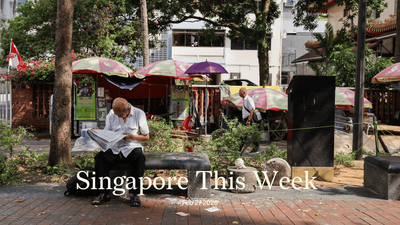
Once, when people read print newspapers, a pile at the doorstep signalled that a home was unattended. People going on holiday either requested a pause on delivery, or relied on close neighbours to collect them. These small accumulations were quiet indicators—someone being away, or if something might be amiss, prompting a knock on their door. Physical copies have faded and connections have migrated to screens. It has become harder to know if our neighbours are doing fine. At times, the first sign that they’re not is a foul smell seeping out from under a closed door. Solitary deaths are an unfortunate reality in Singapore, and those with friends in the Singapore Civil Defence Force have probably heard countless stories of doors forced open and homes entered too late.
This week, a 94-year-old man was found dead in his single-room HDB flat at Macpherson, making it the fifth solitary death in 2026, according to Facebook page Death Kopitiam Singapore, a volunteer-run page that aims to create a more “death literate Singapore”. The Ministry of Social and Family Development does not track data on lonely deaths, but the broader landscape is clearer: in 2024, about 87,000 residents aged 65 and above—roughly seven percent of Singapore’s elderly population—were living alone. A 2018 Duke-NUS report found that the reasons for this solitude were varied: divorce or widowhood, marriages never entered, fractured family ties, or difficult experiences with previous tenants. Living alone, the report noted, can be a form of autonomy for older adults, associated with positive self-rated health and greater independence in daily life. The risk lies in the gradual narrowing of social contact. When interaction with the outside world is reduced to errands and appointments—meals collected, check-ups attended—life becomes functional rather than relational. As mobility and cognitive abilities decline, the absence of these networks grows more consequential. What disappears, over time, is not just companionship but the assurance of having someone knowing your whereabouts.
Across Singapore, a web of programmes attempts to soften the edges of ageing alone. Senior Activity Centres run activities meant to keep older adults engaged, while other initiatives work to ensure that those living alone remain in contact with someone beyond their front door. One such effort, “No More Undetected Death”, by Loving Heart Multi-Service Centre, trains and pays volunteers to befriend seniors living alone in Jurong East; Allkin and TOUCH Community Services run similar programmes elsewhere.
Yet social connection, researchers suggest, is not only about presence but purpose. A report by the WHO Commission on Social Connection found that older adults often hold heightened expectations of social relationships, making loneliness more acute when these expectations go unmet. Two needs are especially salient: generativity—the ability to contribute meaningfully and care for future generations—and respect, the feeling of being valued and included. While daily mahjong games, morning exercises, and routine check-ins support well-being, initiatives such as senior volunteerism that respond to a deeper need to feel useful and be an active contributor to society are equally important. As are projects like the Cheng Hong Welfare Service Society, which arranges last rites free of charge for seniors without next of kin through its “Afterlife Memorial Service”. Meanwhile, informal memorials such as the Death Kopitiam page and other social media obituaries take on an unexpected significance too. They serve as modest witnesses, recording names and ages where there might otherwise be only silence.
As Singapore approaches super-aged status in 2026, we need more systemic ways to aid our elderly. Because the question is no longer simply how to keep them alive and accounted for. It is how to care for them in ways that extend beyond necessity—toward purpose, recognition, and the simple dignity of being remembered.
Society: The GIC-Temasek debate rumbles on with Jamus
Last month the Financial Times (FT) analysed GIC and Temasek, concluding that their roughly five percent annual average returns (in US dollar terms) over the past decade means they are “among the weakest performers among 50 similar global organisations over a 10-year period, according to Global SWF data, despite being among the largest and best resourced.” (Comparisons were in nominal terms and without adjusting for the level of risk.) Among other things, the FT said that Temasek, with a S$434bn portfolio, “has been beset by a litany of mis-steps, including from its forays in China and with start-ups.”
The two entities, along with MAS, contribute roughly 20 percent of government revenue (in line with the formula dictating how reserves are tapped). Amidst an ageing population and rising healthcare and other costs, Singaporeans are more closely scrutinising how our money is being managed. As society reflected, the PAP customarily trotted out a minister in Parliament early this month to defend their performance as “reasonable and within expectations”. Singapore’s dutiful mainstream media also followed suit, with “Don’t meddle with GIC, Temasek’s mandates”, an editorial in The Business Times (BT) by Ben Paul, a financial analyst and journalist. Last week, Jamus Lim, Workers’ Party (WP) MP, a former World Bank economist and current associate professor of economics at ESSEC Business School, submitted a response to BT.
Lim agreed with Paul’s (and the government’s) assertion that, given GIC’s and Temasek’s unique mandates, it’s tricky to benchmark them against other sovereign wealth funds, and that “meddling with them could be risky at this stage of the market cycle.” But he questioned whether they’ve been underperforming “even when measured against the yardstick of the mandates our government has set for them.” With GIC, Lim said the evidence “would suggest that either GIC took less risk than the government would have wished that it take, or that it did indeed garner lower returns than might be expected, for its risk profile.” And given that about half of Temasek’s portfolio is in private assets, “either it has failed to harness the additional returns from this part of its portfolio, or its public exposures have significantly underperformed a simple index.”
Alas, BT declined to publish a trained economist’s response. Lim, in “the spirit of constructive debate”, put it on Facebook, “so others can evaluate if indeed I have a point, or if my view is misguided.” Perhaps citizens should simply be grateful that alternative platforms exist. But it’s worrying, particularly in a world where informational environments are often polarised, that Singapore’s elected politicians, who’ve won our mandates, are still seemingly ostracised from the mainstream.
Some further reading: In “Why Singapore’s elderly continue to work: reserves and CPF demystified”, Bobby Jayaraman explains everyday money flows.
History Weekly with Faris Joraimi
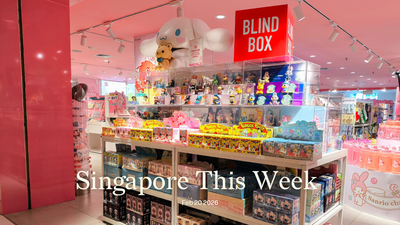
A recent CNA investigative report recently covered soaring commercial rents in Kampong Gelam, causing disquiet among long-term tenants and members of the public about the area’s changing character. The narrow and picturesque Haji Lane, clouded by shisha fumes in the 2010s, has given way to novelty- and tourist-oriented shops. Ice-cream and boutiques aside: stores selling Labubu and blindbox merch? Korean-style self-photobooths? Why are people paying to take pictures of themselves in studios made to look like aeroplane cabins, when you already have the quaint century-old shophouse architecture of Kampong Gelam all around you?
Yet money is spent, and the landlords get richer. There’s been a 25 percent increase in rent here between 2023-2025, which is five times that of Little India and Chinatown in the same period. (Some tenants said rent even doubled over the past year.) Prime location and heavy tourist footfall are driving this, said CNA. But that’s against the backdrop of a freewheeling commercial property market. It’s easy to exploit: a “serial subletter” can monitor leases as they near expiry, bid above existing rates, then rent the units out again at higher rates. The overall rent climbs, as existing tenants struggle to cope. Bigger fish have the appetite to match: as many as four souvenir shops on Haji Lane are run by a single owner. An influx of foreign enterprises stokes concern about the dilution of Kampong Gelam’s culture and heritage.
These anxieties aren’t new. Lifelong resident Faizah Jamal, a former nominated MP, organises walks of Kampong Gelam to resist shallow misconceptions about her neighbourhood. Her serial Facebook posts lament the kitsch, while documenting places that still feel familiar. Urban historian Imran Bin Tajudeen has criticised the area’s redesign and branding by the Singapore Tourism Board (STB) into a postcard scene from the Arabian Nights, despite its vital connections to the Malay-Indonesian world and Islamic societies across the globe.
Arguably, Kampong Gelam has been “changing” since 1824 when Sultan Hussein set up his royal town at the confluence of the Rochor and Kallang rivers. A Muslim community sedimented over it gradually, across generations, creating an economy oriented around the mosques, the annual hajj, and seasonal trade with the Archipelago. But a deeper shift began when the STB made it a cultural attraction in the 1980s. A different kind of experience economy grew, selling “heritage” and vintage vibes. But a lot of the old trades are still around—Arab textile merchants, Minangkabau eating-houses, and Tamil hajj-suppliers. They’re part of the retail and service economy that’s always been the “culture” of Kampong Gelam too. The faithful still come to pray, and patronise these businesses. It’s never been a conflict between commerce and culture, but between a moral economy that serves and sustains a community over time, versus a predatory economy of profit without regard for ongoing traditions and relationships that made the space it’s in. The “Kampong Gelam Alliance” mediates between landlords and tenants, and organises happenings to increase footfall. But without a reform of the current regime that can empower tenants and patrons, we’ll only live and breathe what the landlord sells: even if it’s junk.
Arts: ‘I’ll leave a trace / Before you forget my face’
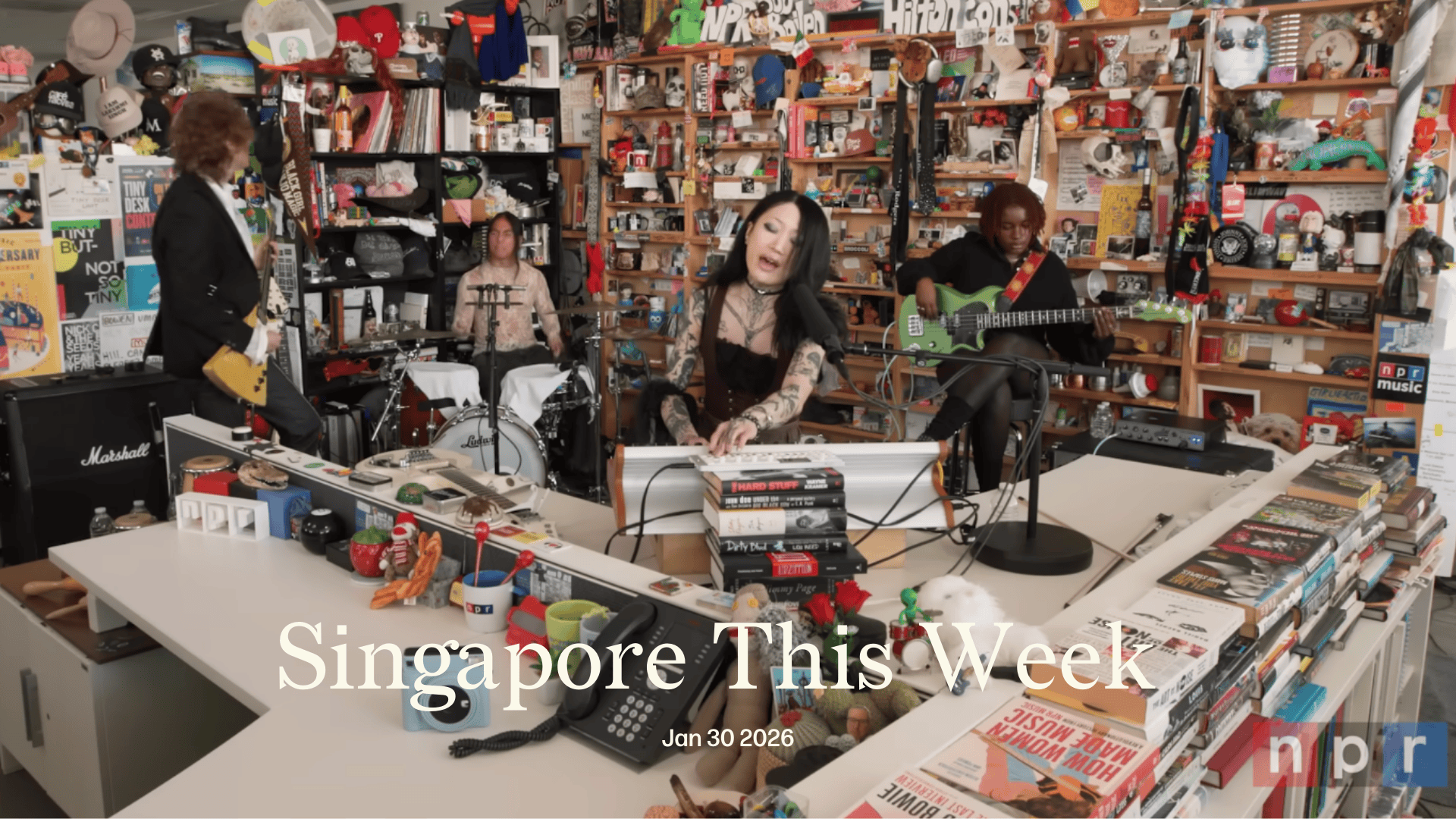
We won’t be forgetting yeule’s face anytime soon. The musician has left their trace on the set of the iconic NPR Tiny Desk. The London-based Gen Z artist is known for their gauzy soundscapes for the age of the digital native, all fizzy static and casual glitchery, layers of vocal distortion and visceral lyrics. Their latest album is “Evangelic Girl is a Gun”, whose production credits include Singaporean electronic music mainstay Kin Leonn and Grammy winner Mura Masa. It veers away from the walls of sound and wailing feedback of “softscars”, their previous, grungier, record—and wades into shimmery, syrupy pools of noise pop. But don’t be fooled by this saccharine veneer. “I used to be quite an optimist when it came to tech development,” the 28-year-old told The Washington Post. “I am now quite…I don’t want to use the term nihilist…but, yeah…We’re all going to die, and everything’s going to take over. We should just succumb to it all and let it take us, because it’s beautiful.” On “Dudu”, they flit through octaves with a bubblegum brightness that almost distracts you from their serrated lyrics. “Overdosed from the pain / woke up in a bed, restrained / I screamed, and screamed, and screamed your name”, they sing with a disaffected sweetness, “another day, another dose / medicinal genius / cut a line, have a cry / unstable butterfly”.
The long-running Tiny Desk concert series, staged in the American public radio station’s charmingly cluttered office, is beloved not just for its pristine audio engineering and sound mixing, but also for its precise needle-drop on up-and-coming musical acts. It regularly programmes the experimental and emergent—such as yeule—alongside mainstream headliners like Taylor Swift and Coldplay. But it’s also a popular platform for musicians to show off a tight sampling of their artistic trajectory, as well as new musical arrangements. Daniel Caesar crooned his way through his latest confessional, “Son of Spergy”, swapping out a band for an entire choir. Fred again.., the DJ-producer who regularly fills clubs and arenas with thousands of dancing bodies, swivelled and skittered around the desk for his solo, looping live riffs off a vibraphone and splicing in snatches of spoken word poetry. Electronic music has never before felt so intimate. yeule’s 20-minute set goes for a similar stripped-down aesthetic, backed by a three-piece band with the same effortless cool. Channelling cyborg goth princess vibes in smoky eyeshadow, a velvet corset and arm ruffles, they shed the dense production and processing that usually sheathes their delicate, breathy vocals, giving us a glimpse of the tenderness beneath all that digital armour. And their music does all the talking. No prefaces, no explanations, no back stories, no rambling segues—just one shiv of a song bleeding into the next.
Arts: Sandcastles in the air
Two Singapores. One dredging sand from anywhere it can, the other drowned in it. Carin Leong’s “Sandcastles”, a 17-minute short documentary now available to stream online, draws uncanny parallels between the Singapore we know, and the Singapore in Michigan, a 19th-century ghost town “swallowed by sand following widespread deforestation”. The Brooklyn-based filmmaker presents both case studies in a matter-of-fact compare-and-contrast. An elderly woman pesters her bored grandchildren in their HDB flat with the history of Singapore’s land reclamation; her male counterpart regales his in their Midwestern home with a history of the other Singapore’s deforestation. Lawrence Wong, prime minister, deployed our geographic doppelganger as a cautionary tale in his 2024 National Day Rally speech: “The town lasted for about 50 years, before it was swallowed up by shifting sand dunes. And today, only a signboard remains as a marker of its existence.” Singapore, Michigan was also the subject of a play staged by Pangdemonium last year, adding to the long-held fascination with the twin sites in the local artistic imagination.
Joshua Babcock, anthropologist and linguist, offers us a more nuanced history of “Michigan’s Imaginary Pompeii”. Babcock spent five years living in and researching (our) Singapore as part of his doctoral fieldwork, then spent another four researching the one in Michigan. “The town wasn’t swallowed up all at once in a catastrophic event, thriving one day but engulfed by sand the next,” he writes. “The burial of Singapore, Michigan...wasn’t an act of nature. It happened because of human environmental mismanagement.” This, perhaps, is the true cautionary tale, one also told through the cinematographic whiplash of Leong’s eerie wide-angle shots and microscopic close-ups. She cuts between heaped hills of sand on barges, puttering down water bodies, and aerial views of the same, the wakes of these vessels cutting through murky water. Scenes of excavators scoring and scarring the earth crossfade into magnified grains of sand. We can’t quite tell where one Singapore ends and the other begins. Singapore, Michigan is now owned by a private developer, whose insistence on redevelopment despite local resistance has trapped all in ongoing lawsuits. (No such bickering in Singapore, whose primary developer is the neoliberal government we voted in.)
Singapore is one of the largest importers of sand in the world. In “Magical thinking: shaping sand for our dreams”, Aleithia Low recounts a trip to Vietnam’s Mekong Delta, where she observed first-hand the loss of livelihoods due to sand mining—and its jagged ecological scars: collapsing houses, eroded shorelines, child labour. Leong, Babcock, Low: they’re all telling the same story in different ways, how Singapore’s dream of reclamation contributes to the degradation of dreams in so many elsewheres.
Faris Joraimi, Abhishek Mehrotra, Sakinah Safiee, Corrie Tan, and Sudhir Vadaketh wrote this week’s issue.
Letters in response to any blurb can be sent to sudhir@jom.media. All will be considered for publication on our “Letters to the editor” page.
If you enjoy Jom’s work, do get a paid subscription today to support independent journalism in Singapore.