
Dear Jomrade,
Today we’ve published:
- “Singapore This Week”, by Jom
- “Where is Singapore’s ‘Strategy for Children’?”, by Pooja Bhandari
Inequality has been in the news, with the revelation this week that the top 1 percent of households here hold about 14 percent of total household wealth, comparable to countries like Japan, Finland and Australia. (By contrast, in the US that elite class owns over 30 percent.) Lawrence Wong this week defended our supposedly “progressive” tax system, amidst calls to soak the rich more. He may as well have quoted from The Economist’s cover story last week, “The Robin Hood state”, which was a similar rebuke to plans, from California to New York City, for greater wealth and income taxes.
Jom, as I’m sure you know, is on the side of greater redistribution. We think a lot more can be done here without scaring away the rich and without disincentivising entrepreneurship and innovation, common bugbears. Among numerous reasons, as we’ve argued before, is conflict: the greatest one facing Singapore is not beyond our borders, but within—a brewing class war.
Where statistics fail, literature can help, and two Dickensian stories this week alarmed the bleeding-heart liberal in me. The first was about balaclava-wearing intruders sauntering into homes in the Upper Thomson area and burgling them. It’s just the latest landed-home area to be targeted. There is something relieving, but also disturbing, about the dispassionate, lackadaisical ways in which burglaries here occur, without the confrontation and violence common elsewhere.
The second was about 41-year-old Mohammad Hisyam Basheer, charged this week with snatch theft. Last year, Hisyam cycled towards a 20-year-old man and his sister outside a McDonald’s in Sembawang, past midnight. “I want burger,” Hisyam said simply, as he snatched the bag from him. The bag tore, it fell to the ground, Hisyam picked it up, said “fuck off,” and cycled away. It contained two new cheeseburgers and some leftover nuggets, and was assessed this week at S$21.
Hisyam has been in remand for nine months, and appeared this week in court, in a prison jumpsuit. He remained silent throughout. When the charge was read to him, he covered his face with a mask. When asked if he was going to plead guilty or innocent, he shrugged.
I wish I knew what was going through Hisyam’s mind. Notwithstanding the alleged crime, there’s something deeply unsettling about living in a society where many with Bentleys feast on foie gras, while others lurk in the shadows, waiting for a chance to taste that most mundane of fast foods.
I. Want. Burger. That’s also, if Teo You Yenn doesn’t mind the riff, what inequality looks like.
- MPs across the aisle discuss the bumper surplus
- Is it time to rethink ministerial performance metrics?
- Can Singapore prosecute the two citizens allegedly fighting for the Israel Defense Forces?
- As Singapore ages, sensory loss among seniors is a growing problem
- Rida Video Centre, and honouring slowness and friction in our lives
- “Rotan Rattan: Meditations”, an exhibition at Esplanade
Above are the issues we chose to explore in more depth.
Other news this week included: Singapore’s fertility rate at a historic low, while traffic deaths hit a 10-year high; Lawrence Wong asserting that there’ll be no “jobless growth” even as AI reshapes the economy (good luck, sir); Deliveroo exits the Singapore market; a Tampines Taoist temple offers blind boxes to attract young visitors (Jom wrote about the broader phenomenon last week); an analysis by The Straits Times (ST) of shrinking home sizes; ST on dealing with burnout at work; PAP MP Shawn Huang awkwardly stitches together the symbolism of the “rooster bowl” with the three supposed “kias” of Singaporean identity: kiasu, kiasi, kiabo; and a CNA investigation that reveals an extensive AI-driven disinformation campaign, through Mandarin videos on YouTube, targeting Lawrence Wong and Singapore—one that “suggest[s] a state backer” (though of course “Beijing” and “China” are not words that can be uttered in the piece).
“Where is Singapore’s ‘Strategy for Children’?”, by Pooja Bhandari
Pooja is the founder of EveryChild.SG, and you may remember her incredibly popular previous piece for Jom, “Don’t buy your own ‘koyok’: why we must reform primary education”.
Today she argues for an overarching structural change in how we, as a society, deal with a particular class of people: children. Pooja is clear-eyed about our problems, but also empathetic about all those in the system working towards the same goals.
“We have national strategies for AI, jobs, climate, and ageing. But there is no single, coherent strategy—and no clear leadership—responsible for children and young people (CYP). Apart from MOE and MSF, the Ministry of Health (MOH) and the Ministry of Culture, Community and Youth (MCCY) touch different parts of a CYP’s life, each with different KPIs and practices.
What Singapore desperately needs is a national children’s strategy that involves a coordinated whole-of-government approach, which will help us more comprehensively address everything from SEN diagnosis to the problem of youth vaping in schools…
It may sound like I’m blaming MOE. I’m not. MOE and MSF are different ministries, with different mandates. They have different priorities and offer different services, which is fine. What’s not fine is that, when it comes to children, there’s no ‘higher power’ seeking to standardise services and subsidies across age groups, to prevent ‘cliff effects’ when children transfer from one age group to another, or one ministry to another, or to otherwise ensure that children with complex needs don’t fall through the cracks. It’s not because ‘the system’ doesn’t care. It’s simply that no one has been given the mandate to close the gaps.”
Read her piece, which begins with wonderful insights about what it’s like bringing up neurodivergent kids in Singapore—she has two—and ends with clear, practical recommendations for what we can all do to ensure our children can lead their best lives.
We’ve put Pooja’s piece outside the paywall. Read it. And if you appreciate our independent journalism, join the 2,000 odd paying members now to get access to all our content, starting from just S$10 a month. It’s the only way we can keep doing this.
Jom fikir,
Sudhir Vadaketh, editor-in-chief
Jom
Jom on education
 Corrie Tan
 Faith Ho
 Pooja Bhandari
 Charmaine Poh
Singapore This Week
Arts: Discipline and punish
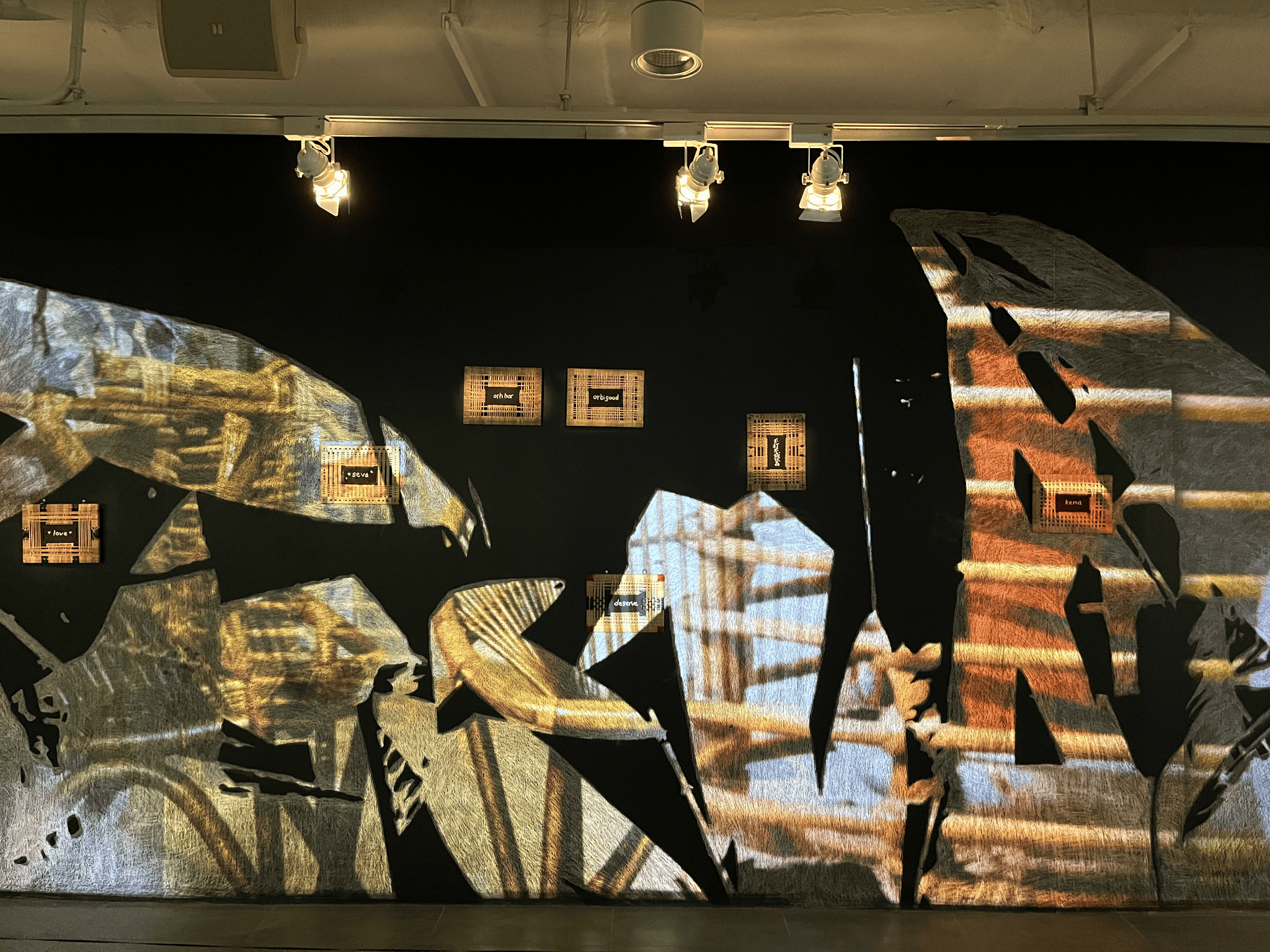
A snarl of rattan vines, sketched in white chalk, stretches across a wall of the Esplanade Tunnel. All angular fronds and sharp spikes, the mural is vaguely menacing, almost violent. The rattan plant is perhaps more familiar to us as a product: as furniture, basketry—or tools of discipline. Those light, thin canes with colourful handles, sold in neighbourhood provision shops and stored in many a Singaporean household for one very specific use.
“Rotan Rattan: Meditations”, an ongoing exhibition by Yanyun Chen and Dave Lim, reflects on the private practice of caning in a public thoroughfare. It deftly exposes the socio-cultural norms that both support and justify corporal punishment in the home. Lining the tunnel walls are also little chalkboards featuring local aphorisms. There are expressions of concern, like sayang, a Malay term of endearment that can also mean “what a pity”, and the Chinese euphemism 为你好 (wei ni hao), the reminder that that the sting of punishment is ultimately “for your own good”. Then there are words of admonishment (si kin na, Hokkien for “naughty child”) alongside invocations of filial piety (seva, Tamil for “duty”). These vernacular phrases blur the line between care and control, nurture and harm. They’re accompanied by Chen’s charcoal drawings of raised palms, shaking fists and wagging fingers, gestures her friends and family would reenact when recounting their experiences of being scolded.
At the heart of the underground commuter passage, a twin cinema poem brings together the parallel perspectives of parent and child, through their shared senses of frustration and helplessness: “Always like that.” / “So how now?” / “Then how?”. Physical discipline may secure compliance, but it also strains parent-child relationships. A 2022 study by the Singapore Children’s Society reveals that such forceful methods have little instructive value, instilling fear without necessarily imparting lessons. Yet the logic of tough love is codified in our vocabulary and inscribed in our muscle memory, and sustains generational cycles of harsh discipline. With the Singapore government doubling down on mandatory judicial caning, corporal punishment continues to be seen as an effective corrective action when all else fails.
Rattan itself may have something to teach us about restraint. Prized for its flexible stems, the South-east Asian climbing palm has to be steamed or boiled before it is pliable enough for weaving. But in its final form, further exposure to moisture will warp the material and make it brittle. In video footage, we see Lim wiping down woven chairs and stools with a damp cloth, tending to the furniture while also damaging it. It’s a potent metaphor for childhood discipline: a little makes one bend; too much makes one break.
Other stuff we like
Be an editorial assistant at AcademiaSG. The independent academic collective is looking for graduate students to help with their website content, coordinate webinars and seminars, and compile their newsletter. Apply if you’d like to contribute to robust and necessary research about, in and for Singapore.
What we now know about inequality in Singapore. NUS’s Ng Kok Hoe dissects the government’s updated inequality measures. “This is not technical nit-picking. It addresses the validity of the argument we sometimes hear, that Singapore has found a superior alternative to high-tax high-redistribution welfare regimes.”
Will an endowment of $300,000 per child move the needle? With declining fertility again on the national agenda, IPS’s Kalpana Vignehsa suggests a radical incentive.
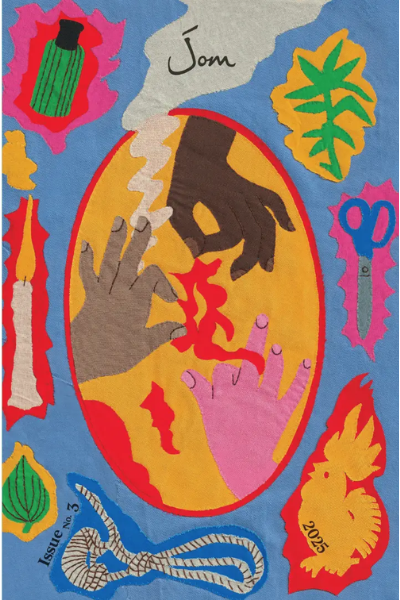
Jom print issue No.3 has just launched!
Dive into its themes of movement, mobility, and magic.
A flavour of Jom. Occasionally, Jom publishes essays outside the paywall. These are on issues we think are in the public interest, and deserve a wider airing. In the past two years, we have published nearly 50 such pieces. Read some of these if you’d like to see samples of our work. We hope they’ll convince you to subscribe. And even if you’re here with no intention of doing so, we hope you’ll enjoy these offerings and consider it time well spent!