
Dear Jomrade,
Today we’ve published:
- “Singapore This Week”, by Jom
- “Beyond the rankings: how does Singapore fare against PISA peers?”, by EveryChild.SG Research Team
It’s been a month since Israel and the US attacked Iran, and the concerns of Singaporeans about the likely short- and long-term impact—to those involved and to our lives here—have deepened. Two articles in The Straits Times captured this breadth of feeling. On the one end was a touching piece about Asian sailors on oil tankers gliding gingerly through the world’s most dangerous strait—and on the other, a typically clinical one about a possible spike in home interest rates that’ll affect local property owners.
Our hearts, minds and wallets seem to be pricked in different ways by each passing sound bite.
Amidst the blur of information from across the world, local incidents have this week alarmed civil society. Is the state becoming more repressive? Our first two blurbs in “Singapore This Week” analyse this.
- The government escalates its use of POFMA, Singapore’s controversial fake news law
- Fadiah Nadwa Fikri, a Malaysian lawyer and recent NUS PhD grad, denied entry here
- Thankful for tax filings in Singapore, while working to make it more equitable
- Insularity, anxiety and trust, as assessed by the Edelman Trust Barometer
- Gene Png, Jeremy Tiang, and Singapore’s other gifted translators
Above are the issues we chose to explore in more depth.
Other news this week included: parents raise S$2.4m in 10 days to fund gene therapy for baby with spinal muscular atrophy (and here’s a 2023 Jom profile of an adult with it); a 47-year-old Indonesian citizen, born in Singapore, convicted of failing to report for NS; two CNA explainers on Asia’s energy transition and its environmental and social impacts, relating to nickel mining in Indonesia and copper mining in the Philippines; ST explainer on the work ahead for Singapore’s new space agency; investigations by CNA and ST into the rise of beauty and massage shops in the heartland; the government blocked screenings between February and May of “Al Awda”, a documentary by director Jason Soo about the eponymous boat carrying activists towards Gaza; and tributes to the late Eddie Kuo, including one from academic Cherian George.
Join 2,000 members keeping Jom independent. From S$10/month—full access, no compromises.
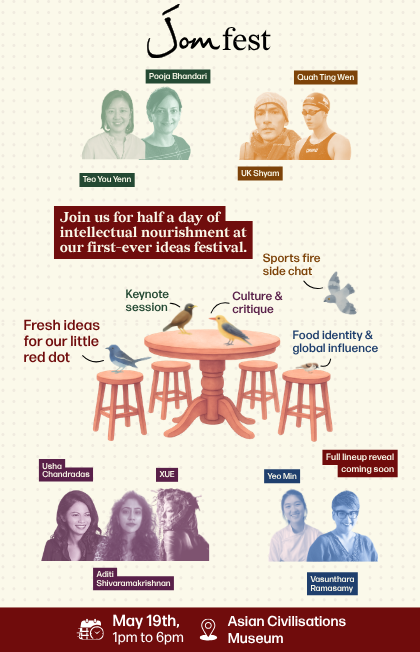
Jomfest, 1-6pm, May 19th, Asian Civilisations Museum (ACM). Our lineup gets better by the day. Confirmed speakers:
Pooja Bhandari, founder, EveryChild.SG
Usha Chandradas, co-founder, Plural Art Mag
May Ooi, former Olympic swimmer turned MMA fighter
Quah Ting Wen, three-time Olympian and national swimmer for Team Singapore
Vasunthara Ramasamy, chef and MasterChef Season 2 Finalist
Aditi Shivaramakrishnan, writer, editor, and arts worker
Teo You Yenn, sociologist and author, This Is What Inequality Looks Like
Toffa Wahed, researcher and librarian, and publisher, The Lemongrass Press
UK Shyam, former national athlete and 100m record holder
XUE, founder, Singapore Butoh Collective
Yeo Min, co-founder, Museum of Food
“Beyond the rankings: how does Singapore fare against peer PISA nations?”, by the EveryChild.SG Research Team
This is our third piece from the fine folk at EveryChild.SG, but unlike the first two, is more of an analysis of a famous global benchmark that educators around the world rely on. Their intro:
“Singapore has found itself near the top of the [PISA] rankings since 2009, when it first started participating in the assessment. While it’s only in the most recent assessment cycle (2022) that Singapore has ranked first on everything, its students have consistently been in the top three countries on each of the three domains. Our worst performance ever was a shame-inducing fifth in reading, back in 2009.
It goes without saying that these results have been highly affirming for educators and policymakers alike—and not without reason. To be clear, we are not arguing that Singapore students’ strong performance is somehow illusory. But they can also sometimes serve as an impediment to needed changes. If Singapore’s education system is the world’s best, why should we continue to evolve? Don’t mess with success, as they say.
And yet…
In the public preview of her upcoming book, Unease, sociologist Teo You Yenn writes of Singapore: ‘The education system for children is excellent, but it is also true it is hard to find one parent or child happy in it.’ Our work at EveryChild.SG has brought home this truth: so many of our students, parents, and even teachers, feel overloaded, beaten-down, and burnt-out by the education system.
Is this what it feels like to be number one?
We felt it was time for an honest comparison of our system with that of other rich countries that also perform strongly on PISA. What we found surprised even us.”
Some of you by now would have put two-and-two together. You Yenn will be giving the keynote address at Jomfest, and her discussant will be Pooja Bhandari, the founder of EveryChild.SG.
So, parents especially, read about the PISA rankings (and all Jom’s other education pieces, below); and then come down to ACM on May 19th for the in-person jam.
Jom fikir,
Sudhir Vadaketh, editor-in-chief
Jom
Jom on education
 Pooja Bhandari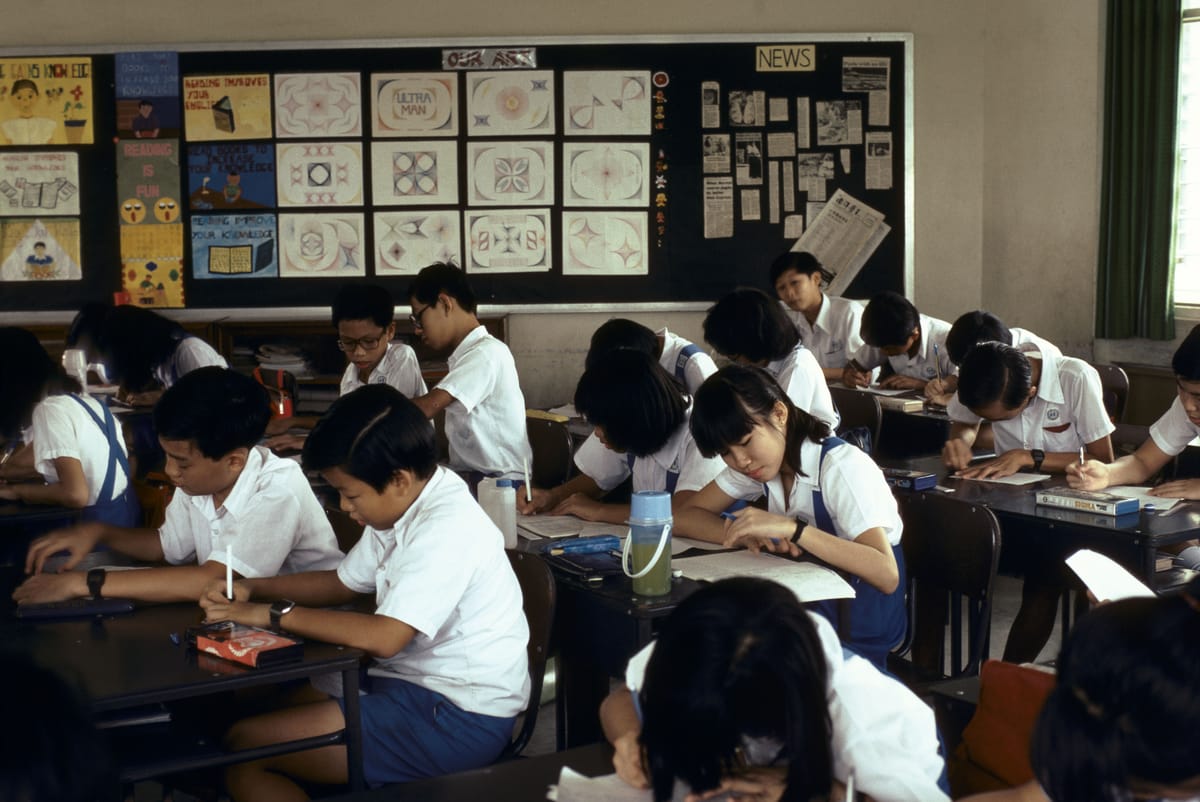
 Faith Ho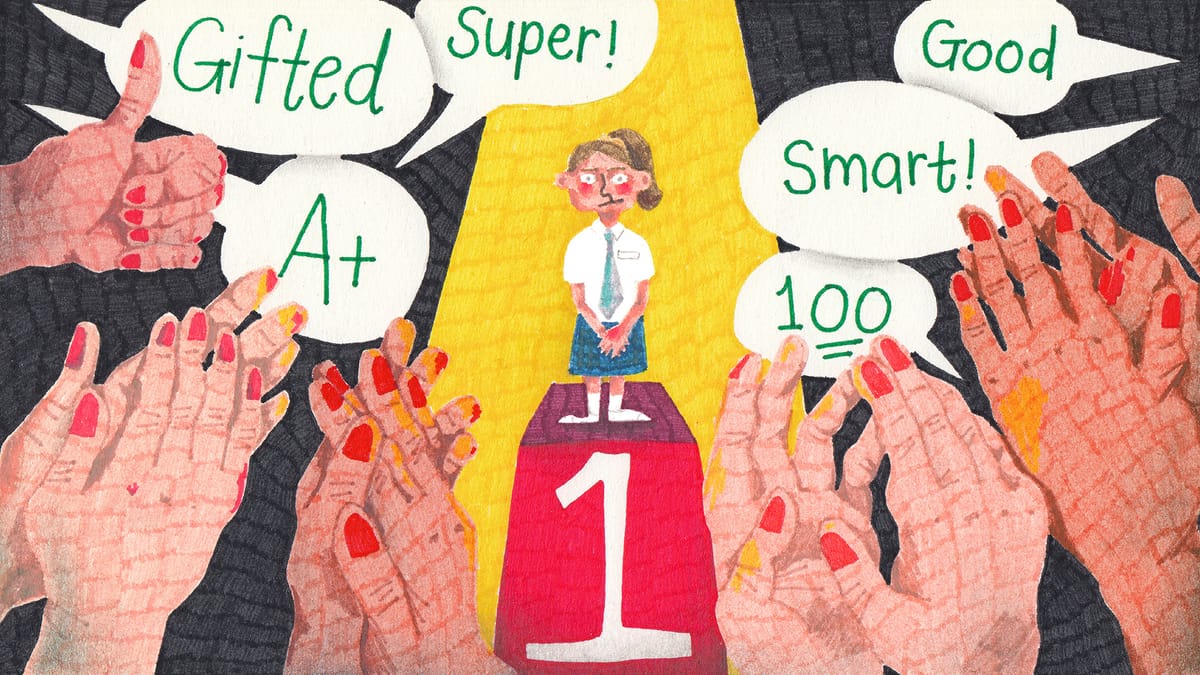
 Pooja Bhandari
 Jean Hew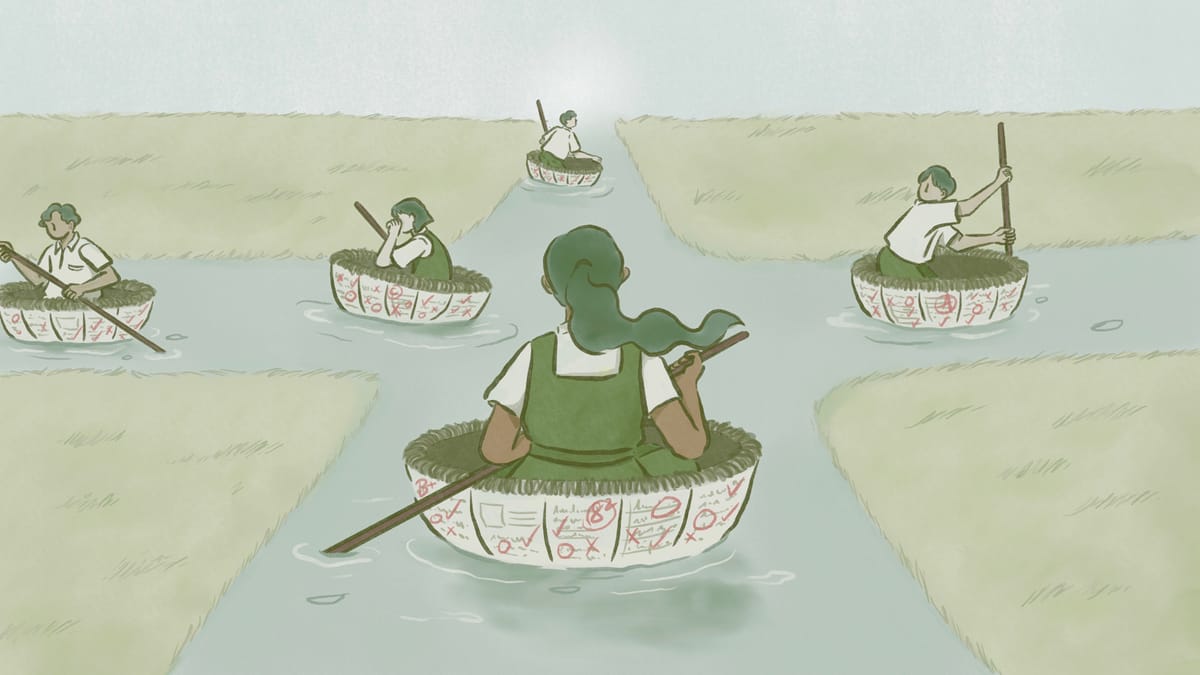
Singapore This Week
Society: Tax season
Earlier this month, you may have heard a guttural groan echoing around town as tax filing notifications from the Inland Revenue Authority of Singapore (IRAS) pinged millions of phones. Donations, deductions, interest payments, reliefs, CPF, SRS: for a few weeks every year, the national lexicon grudgingly expands, making bean counters of us all. Still, at least we can count our own beans; basic numeracy and literacy are all most of us need. So complex are some nations’ tax systems that fully functional adults who’ve earned advanced degrees, work demanding jobs, raise young families, and are generally considered “well-adjusted”—a drab moniker for the sheer cognitive wattage adulthood demands—dissolve into gibbering confusion when the taxman knocks.
On average, it takes a US salaryman nine hours to prepare and file their returns, with the number even direr for businesses. Considered together, the nation’s individual and corporate tax burden tallied an estimated 7.9bn hours in 2024—the rough equivalent of every Singapore citizen and permanent resident doing nothing but taxes for an entire working year. It cost the American economy around US$413bn (S$530bn). Further, every American firm and individual spent hundreds of dollars on compliance alone, adding another US$133bn (S$170.7bn). Total cost: US$546bn (S$700.8bn), not far off Singapore’s GDP. The grotesquely bulbous tax code with shape-shifting regulations supports a gargantuan US tax preparation industry; its software segment alone is estimated to be US$6.9bn (S$8.9bn). Something is going back into the economy after all.
Meanwhile, the Gordian Knot that is the Indian tax code has yet to find its unraveller. So numerous are its loops and splices, and so intricately wound, that studying it, and tugging at it for even the slightest give has become something of a national pastime. It too has birthed an entire industry of accountants, consultants, and lawyers, many of whom firmly believe that the code is more honoured in the breach than the observance. Philosophers abound, seemingly competing to capture as pithily and widely as possible the entire experience of “doing” taxes. “It’s an art, not a science,” say some; “the Indian tax system is like a road-roller, and your job is to not be trampled beneath,” pontificate others. In a bid to move from the tangled old system to a simpler new one, the country is now running two concurrent regimes, each with distinct income slabs, exemptions, and rebates. To figure out which one is more beneficial, taxpayers can either turn to their advisors, or spend hundreds of joyful hours on forums, websites (including our very own DBS), and YouTube.
Certainly, some of the complexity stems from sheer scale. But a lot of it is the product of outdated, unnecessary, irksome bloat. Thankfully, IRAS prioritises speed and simplicity, such that the time can be better spent with family, friends, work, the sofa or the dentist— literally anything else. Yet, while much of the process here is “outsourced” via auto-inclusion schemes, pre-filled deductions, and tax estimates, our thinking should not be. As we breeze through filing this season, it’s worth pausing to consider how taxation might be used to reduce inequality. Taxes on net wealth, capital gains, and inheritance—none of which Singapore has, and all of which are the subject of robust debates—should remain an ongoing part of the national conversation in a “We First” society.
Other stuff we like
Join Tak Tahu Townhall. Workers Make Possible along with three student-led organisations are hosting an art jam and townhall panel discussing worker’s rights—be it in the workplace or on the job hunt. Happening tomorrow, 3-6pm at *SCAPE Commune.
Singapore Art Museum. A weekend of workshops, performance lectures, and artist talks.
What the War Has Done to Iranians. A multimedia piece in The New Yorker, in which a Tehran resident “chronicles a country trapped between bombardment and repression—too terrorized to move, let alone start an uprising.”
A flavour of Jom. Occasionally, Jom publishes essays outside the paywall. These are on issues we think are in the public interest, and deserve a wider airing. In the past two years, we have published nearly 50 such pieces. Read some of these if you’d like to see samples of our work. We hope they’ll convince you to subscribe. And even if you’re here with no intention of doing so, we hope you’ll enjoy these offerings and consider it time well spent!