
In Parliament this week: the government’s in-principle support to institutionalise the office of the Leader of the Opposition; the government’s defence of high salaries for political office holders (soon subject to review); debate about mandatory retrenchment benefits, with the PAP’s view, a rebuttal from the WP, and one from the (unelected) PSP; and the WP’s suggestion to Make (Singapore) Equities Great Again.
Other news this week included: a commentary by The Straits Times on Singapore crossing the “super-aged” threshold this year; the prevalence of “problematic [video] gaming” among young adults; Singapore’s new space agency; an update on the Nipah virus; KF Seetoh, referencing the closure of Warong Nasi Pariaman, reiterating the problems with rent and other costs for the F&B industry; “Migrant workers should not be made invisible to be accepted”, HOME’s response to the MOM’s view on shared spaces; the criminal trial of Goh Jin Hian, son of Goh Chok Tong, former prime minister, begins; the AirFish, a water-skimming craft, will soon begin operations between Singapore and Batam (no more bumpy rides?); and the best reason why you shouldn’t take your impression of Bruce Lee too far.
Our picks
Society: Will robots worsen our divides?
From Davos to downtown, Singaporeans have been contemplating the impact AI will have on societal equity. In a long brown jacket and set against the stark whiteness of the Swiss ski town, Tharman Shanmugaratnam, president, told the GZERO’s Ian Bremmer that countries must cooperate to avoid AI’s worst excesses while harnessing its transformative powers. The Cold War’s arms race was fought between states, he said, but today’s is led by private companies moving at blinding speeds. “Whilst you can count nuclear warheads, it’s much more difficult to count algorithms and the manyfold effects of algorithms,” he added, citing misinformation and cyberwarfare.
But he believes there’s sufficient “common interest” to disseminate productivity improvements so that “the market grows for all the dominant powers in AI”. Smaller countries must be at the table, he asserted, because “sometimes it’s the most vulnerable countries that are the first to want to institute guardrails and the major powers eventually come on board.” For Singapore specifically, Shanmugaratnam spoke about the need to distribute its benefits “up and down the workforce…a challenge everywhere in the world. And it’s not obvious we’re going to succeed.”
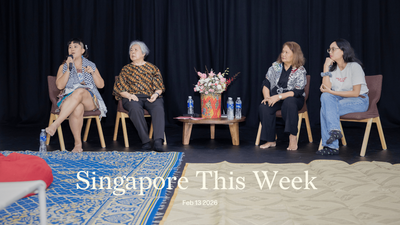
Separately, HSBC Singapore hosted a panel discussion to launch “AI and the Future of Women in the Workplace”, a report by NINEby9, a Singapore-based not-for-profit gender advocacy group. It asserts that AI’s penetration puts women at relatively greater professional risk through a “double exposure”. First, there are more of them in jobs, like clerical and administrative work, which are at greater risk of automation: 33.8 percent versus 28.8 percent for men in Singapore. (Other studies suggest that women are underrepresented in occupations with the highest exposure to AI, while overrepresented in some, like cleaners and helpers, with less exposure.)
Second, women are not as well positioned as men to capitalise on roles where AI is advancing careers. Reasons range from traditional underrepresentation in STEM scholarship to women’s relatively more thoughtful, deliberate adoption of AI. “The people who get noticed are those who experiment first, not those who are the most accurate,” said a technology executive from Malaysia. Another finding is that Gen Z women are affected the most, because “AI adoption is advancing fastest in the places where early careers often start”. The next generation, it contends, “faces a broken career ladder before they even begin the climb.” A host of recommendations to mitigate all this include nurturing a more inclusive AI learning culture, and aligning HR and tech.
The Economist last week sought to dampen fears of “a tsunami” hitting the labour market, as the IMF’s head recently suggested. Among its reasons are the so-called “jagged frontier” of AI: making complex medical diagnoses, for instance, while still struggling with hallucinations, fabrications and other issues; the complexity of most professional roles: only around four percent of occupations use AI across three-quarters or more of tasks, according to research from Anthropic; and, like with any new technology, the fact that it’s still in its infancy and its impact will only be felt in time. “It’s like we’re all accountants and Microsoft Excel was invented last weekend,” quipped OpenAI’s chairman. Regardless of when and how the Singaporean labour market will be affected by AI, it’s laudable, for a society where addressing equity is often a reactive afterthought, that such conversations are even occurring—and at the highest levels.
Society: The ‘Lolita Express’ in the little red dot
Bill Clinton apparently flew from Shenzhen to Singapore on Jeffrey Epstein’s private jet in May 2002, along with Epstein, Ghislaine Maxwell, and others. Clinton gave a 90-minute talk here that earned him over half a million dollars, and was hosted by Goh Chok Tong, then prime minister, to a dinner at the Fullerton Hotel. Following the latest dump of Epstein files by the Department of Justice, photographs of that dinner have again been circulating on the internet. Among others in attendance were then-politicians George Yeo and Shanmugaratnam, and diplomats Steven Green, former US ambassador to Singapore, and Tommy Koh, former Singapore ambassador to the US. Shanmugaratnam, who had to sit next to Epstein, looks uncharacteristically gloomy.
Epstein was still three years from being investigated for sex crimes and six from being convicted. Barring further evidence, any suggestion that Singaporean leaders acted improperly is bunkum. By contrast, there’s a cabal of white male elites across the political spectrum who continued to canoodle with Epstein long after his conviction, and who rightfully deserve our condemnation. These include Steve Bannon, Richard Branson, Noam Chomsky, Bill Gates, Peter Mandelson, and Prince Andrew—or whatever the heck he’s called now. All of them, including Clinton in the early 2000s, enabled him. “That’s what gave Epstein credibility,” Juliette Bryant, a South African victim recruited in Cape Town, said. “The fact that he was with Clinton.” For liberals, the revelations about erstwhile hero Chomsky have been particularly crushing. As recently as 2019 Chomsky was apparently advising Epstein about how to deal with public indignation, railing against “the hysteria that has developed about abuse of women”.
For Singaporeans, time to move on? Not quite. For one, it would be concerning if underaged women in 2002 were being recruited here or trafficked in or out on (what the tabloids call) Lolita Express. Second, it appears like the National Archives of Singapore (NAS) scrubbed its site of all Epstein visuals sometime in the past few years, as documented by Daily Beast, and verified by Jom on the internet’s Wayback Machine. If there was nothing to hide, as we believe, why hide? Was it self censorship by NAS or were they given an order? (NAS did not return a request for comment.) Amidst the triumphalism about transparency with the Albatross files, it’s a stark reminder that history is made—and re-made—every day. And not just here, a nationalist might rightfully sneer: the politicised process in the US, with dribs and drabs of Epstein evidence released over years, is proof of the problems even liberal democracies face when confronting power. All the more reason for all of us to collectively check it.
Society: Can sex workers catch a break?
Non-consensual audio recordings. Drones sweeping through alleyways. Photographs of women in handcuffs, their bodies framed for spectacle. In Singapore, mainstream media coverage of sex workers has often taken the form of pseudo-investigative journalism, leaning on ethically dubious surveillance to sensationalise and stigmatise. A smaller body of work offers more dignified portrayals, gesturing toward a shifting public sentiment—one more often articulated in online forums than in official discourse.
Yet these fleeting moments of empathy sit uneasily beside a hostile regulatory environment that continues to tighten its grip on sex work without meaningfully protecting those within it.
This impulse toward control was visible in September last year, when Tanjong Pagar GRC MP Foo Ce Xian declared “enough is enough” in response to public unease over massage establishments at Tanjong Pagar Plaza. He called for stronger “upfront regulatory levers” under the banner of refreshing the area. It has since been reinforced by amendments to the Massage Establishments Act, despite the industry already operating under shrinking licences—from 907 in 2023 to 868 in 2025.
Sex work isn’t completely criminalised in Singapore. The Specialised Crime Division of Singapore Police Force issues “yellow cards” to a limited number of brothels, which allows (mostly migrant) sex workers to acquire a Work Permit. Eligibility criteria are opaque. Once the permit is granted, the workers are subject to rigid controls: compulsory medical checks, restrictions on movement and romantic relationships, and eventual bans on re-entering Singapore. While the legal status provides nominal immunity against Criminal Investigation Bureau (CID) officers, workers are still vulnerable to raids, loss of income (a commission cut to owners), and long-term stigma; their history becomes permanent record, and they have few safeguards against abuse or discrimination. Unsurprisingly, some workers avoid the permit altogether, judging that it costs more autonomy than it affords security.
All this has pushed a lot of sex work underground, with independent workers soliciting on the streets and establishments fronting as massage parlours or hair salons. This complicates public health outreach: since the majority of sex workers operate outside the legal framework, they’re unable to access essential services. A stricter clampdown may displace current workers, but they will likely be replaced by new inflows of migrant labour, and businesses will retreat further into the shadows.
What could a more enlightened approach to sex work look like? The long-term goal should be decriminalisation, which “best supports the safety, health, and financial well-being of sex workers…” according to one prominent civil rights organisation in the US. This won’t happen overnight, but greater transparency in the yellow card system and consultations with the workers in creating regulatory models that reduce collective harm through safe working conditions, as well as mechanisms to seek help or report exploitation would be a good start.
Earth: Walled garden
Whose job is it to keep us safe from rising sea levels? The Coastal Protection Bill, to be debated in Parliament next month, spreads responsibility across government agencies as well as corporate land owners and lessees operating along the shoreline. Parties will be required to appoint a flood protection manager to work with PUB, which is expected to issue a code of practice later this year. They’ll have a menu of responses: planting mangroves, building seawalls or deploying more engineered solutions like moveable barriers or flood-defence systems, including gates that can be opened or closed depending on the weather conditions. The aim is for Singapore to over time be garlanded by a continuous natural-manmade barrier holding back the swelling seas.
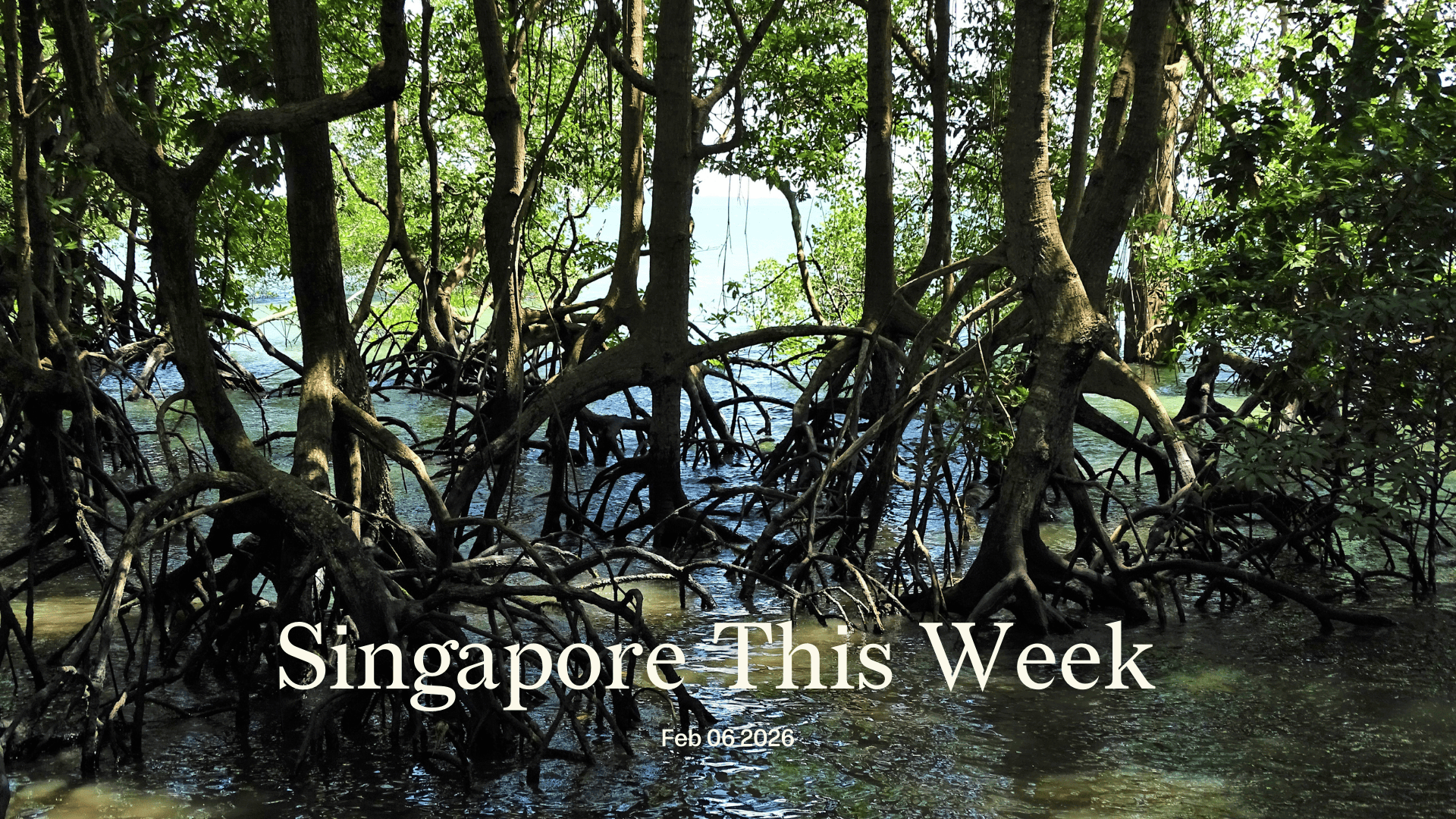
It’s good that private enterprise is being co-opted in the battle against climate change (although some will wonder whether the proposed legislation’s teeth—up to two years’ jail and a S$200,000 fine for violations or noncompliance—are sharp enough). It’s also encouraging that policy appreciation of mangroves, heedlessly destroyed in Singapore’s headlong rush into modernity—over 95 percent lost over the last 200 years—continues to deepen. Mangroves have been restored on Pulau Semakau and Pulau Tekong; plans are underway for the Mandai Mangrove and Mudflat Nature Park; and the NParks’ supported Restore Ubin Mangroves Initiative hopes to create a four-hectare mangrove ecosystem in Pulau Ubin’s Sungei Durian by 2026. “Utilising mangroves is not only less costly, if the process is done carefully, they are still able to be effective in protecting shorelines to keep up with rising sea levels [here’s how], which hard methods such as sea walls are not able to adapt to,” said associate professor Wong Poh Poh. Besides, mangroves can store huge quantities of planet-warming carbon.
Amidst the plaudits for far-sighted, anticipatory governance though, we must continue to question our own role in deepening the climate crisis. Hard protections such as sea walls and barrages will only feed our hunger for the sand we buy from our poorer neighbours. This promotes “rampant sand dredging and perpetuates a clear and present eco-danger for the region”, especially for the low-lying areas vulnerable to rising waters. Communities in Cambodia, Malaysia, and Indonesia—which recently lifted a two-decade sand export ban—are already suffering the consequences of Singapore’s propensity to wave cash in their governments’ faces. Supporters may argue that the onus lies with those governments to protect their own but surely there’s some ethical burden on us too, urgent as our needs may be.
“There is a need to strengthen trust and solidarity between developed and developing countries,” Grace Fu, minister for sustainability and environment, and one of Time’s Top 100 influential climate leaders in 2025, told the magazine last year. “Deepening this pact is critical to advancing global climate action and ensuring that no one is left behind.” May our actions be faithful to our words.
Arts: Fantastic beasts and where we found them
Those who strolled through the gates of Fort Canning Park last weekend would have found themselves within a very different walled city: the grand metropolis of Xenaria. Apothecaries plied mysterious potions, a winged musician sizzled on his fiddle, the warrior Sultan Saladin faced down his crusading nemesis, Baldwin the “Leper King”: just some of the thousands of characters who queued all the way up the historic hill to reenact a very different kind of history. We don’t often think about dragons and dress-up in Singapore—a city more recently preoccupied with official hagiographies of founding fathers than playful medieval myth-making—but the rabid popularity of the country’s first-ever fantasy renaissance fair certainly proves otherwise.
“Ren Faire SG: The Origin” was the result of a 23-year-old’s determination to make her fantasy a reality. Caylee Chua decided to worldbuild after visiting medieval festivals in Europe and touring one virtually in the Philippines on TikTok. She stumped up a five-figure sum from her savings, admitting that “the upfront investment was scary”. Still, with help from her family and friends, Chua dreamt up a two-day ticketed bazaar featuring over 60 vendors, a dense lineup of performances both roving the grounds and up on stage, and, as is de rigueur at renaissance fairs around the world, sword-fighting tournaments by knights clad in full clanking metal, courtesy of the Pan Historical European Martial Arts Society. Where other medieval fairs may emphasise costumes and characters from the English Renaissance (15th-17th centuries), Singapore’s pioneering event welcomed everyone from the Nusantaran royal court to the xianxia Chinese fantasy genre, with moodboards of gold-threaded songket and batik alongside hanfu girls in flowing robes. Chua runs a handmade jewellery business, and that DIY derring-do is part of the appeal of fairs around the world, including this one: a shield maiden here constructed her mail coif from 200 can tabs.
The very first Renaissance Faire was founded by American teacher Phyllis Patterson in 1963, an idea that came to her while she was running an after-school programme on theatre history. Her son told The National Geographic: “She wanted to get people out of the classroom and into this other imaginative realm.” These early fairs were both craft revival and countercultural refuge. Traditional crafts like blacksmithing and glassblowing were a mainstay in fair marketplaces; these were also an artistic home for left-leaning creatives who’d been struggling for work in the wake of Cold War paranoia, with a self-policing entertainment industry induced by the McCarthyism of the 1960s. An early attendee recounted: “The Faire brought the lefties, the artists, the longhairs and the eccentrics out of the woodwork to play together under the trees.” It’s not too far off from the spirit of Ren Faire SG, a little forest oasis of all-day play resisting an otherwise hypercapitalist urban sprawl. Sometimes it’s becoming someone else that allows you to be exactly who you are.
Arts: Conscious uncoupling
It is a truth universally acknowledged that Singapore’s theatre companies and their histories are unusually populated by power couples. Kuo Pao Kun and Goh Lay Kuan of The Theatre Practice. Ivan Heng and Tony Trickett of Wild Rice. Nelson Chia and Mia Chee of Nine Years Theatre. Huzir Sulaiman and Claire Wong of Checkpoint Theatre. But perhaps none have been more explicit about their joint artistic pursuits than Tracie and Adrian Pang, who put their family name in their company name: Pangdemonium. The striking husband-wife team have maintained a reputation for transporting surefire hits directly off Broadway and the West End and straight onto the Singapore stage, occasionally making tweaks for context, but largely promising well-made, high-polish Euro-American repertoire. They knew their market and their strengths, and indulged in them. They quietly attended art school graduation shows and scouted every possible triple threat. If they couldn’t, they imported them. They ran a three-show, tightly curated season, typically: a critically-acclaimed new arrival from a culture capital; either a Singapore commission or a cause-based work with a social justice bent; capped with a popular musical. This season, when announced last year, looked no different. You have the dystopian satire “A Mirror”, which starred Jonny Lee Miller at the Almeida Theatre, one of London’s most prestigious playhouses; the premiere of Singapore-born playwright Stephanie Street’s “Force Majeure”, based on Anton Chekhov’s “Three Sisters”; and “Come From Away”, the post-9/11 musical that swept almost every stage award imaginable. And for over 15 years, this was a strategy that seemed to work. If the Pangs promised an evening out on the town, you could expect, at worst, a competent adaptation of a challenging but rewarding work; and at best, well, the best Broadway has to offer in the city you call home.
But that era is over. The Pangs announced in a carefully worded press statement that they’d be closing down the company, and that 2026 would be their curtain call. “[I]t is time to let a good thing go,” they wrote. They reiterated that they’d weighed every possible option, deliberated every possible decision. Only one sentence pointed to the personal: “as with the best love stories, we just want to call an end to the Pangdemonium story on our own terms, on a grace note, and while we are still in love.” They gave no in-person interviews, save what felt like an extension of their statement, emailed to CNA: “This decision is not driven by cost pressures. The season finale follows a personal leadership decision and a deliberate choice to conclude the company’s work with intention and integrity.” It’s tough to sustain the professional and the personal. Theatre companies have long struggled with succession in Singapore; popular puppet theatre The Finger Players went through a public soul-searching as it restructured the financially floundering organisation in 2018. Its staff posed these rhetorical questions on social media: “With the present in-house artists being mostly in their 40s and 50s, we ask ourselves this: can the company survive beyond the lifespan of its founders and first generation of artists? Can we roll out a succession plan to ensure the longevity of the company, one that goes beyond the lifespans of its artists and creatives?” While we’ll weather our pangs of grief for another arts company gone, we might also have a little Pangs Giving for all those who live another day.
Abhishek Mehrotra, Sakinah Safiee, Corrie Tan, and Sudhir Vadaketh wrote this week’s issue.
Letters in response to any blurb can be sent to sudhir@jom.media. All will be considered for publication on our “Letters to the editor” page.
If you enjoy Jom’s work, do get a paid subscription today to support independent journalism in Singapore.