
Dear Jomrade,
Today we’ve published:
- “Singapore This Week”, by Jom
- “Everyday economics: What the fruit uncle knows”, by Serene Koh
Last week we wrote about the brave Iranian women footballers playing in Australia. Subsequent events—Iran branding them as traitors for not singing the national anthem, one of them flashing a “help” signal from the team bus, some choosing asylum, some changing their mind at the last minute, allies moving them from one safe house to another—made for a macabre drama, one of many produced by this war with no end in sight.
For many around me, this second week of the war has been an unsettling one. As the shock subsides, and horror sadly but inevitably assumes some banality, confusion and uncertainty reign. We’re sort of staring into the abyss, and must somehow carry on. At Jom, we’ve had a busy week writing (mostly) about men, and confirming an event that’ll be headlined by women (more below).
- As Montfort goes co-ed, what are the gender-related student issues to contemplate?
- Why has Singapore decided to offer S$20,000 sign-on bonuses to bus drivers?
- The propaganda war over ministerial salaries has begun
- The government wants to help you make friends
- Obituary of Syed Muhammad Naquib al-Attas, Malaysian thinker and scholar
- Hannu Lintu, the Singapore Symphony Orchestra’s incoming maestro
Above are the issues we chose to explore in more depth.
Other news this week included: Pritam Singh facing disciplinary proceedings from the Law Society; Jay Ish’haq Rajoo, a popular commentator, charged for alleged false statements in his TikTok videos; Singaporeans repatriated from the Middle East on RSAF jets; Johor residents deal with noise, dust, and water shortages as swathes of land make way for data centres; a Singaporean woman’s 13 failed BTO attempts spark debate about fairness in the housing ballot system; Shein’s boss praises Chinese roots, after having moved its HQ to Singapore, and having encountered opposition to listing in New York and London, sparking renewed debate about “Singapore-washing”; following the death of a 13-year-old boy in Kallang River, ST offers a guide to safe fishing in Singapore; the man behind the Quran-stepping video may be mentally unwell, and is likely the same person convicted for similar acts.
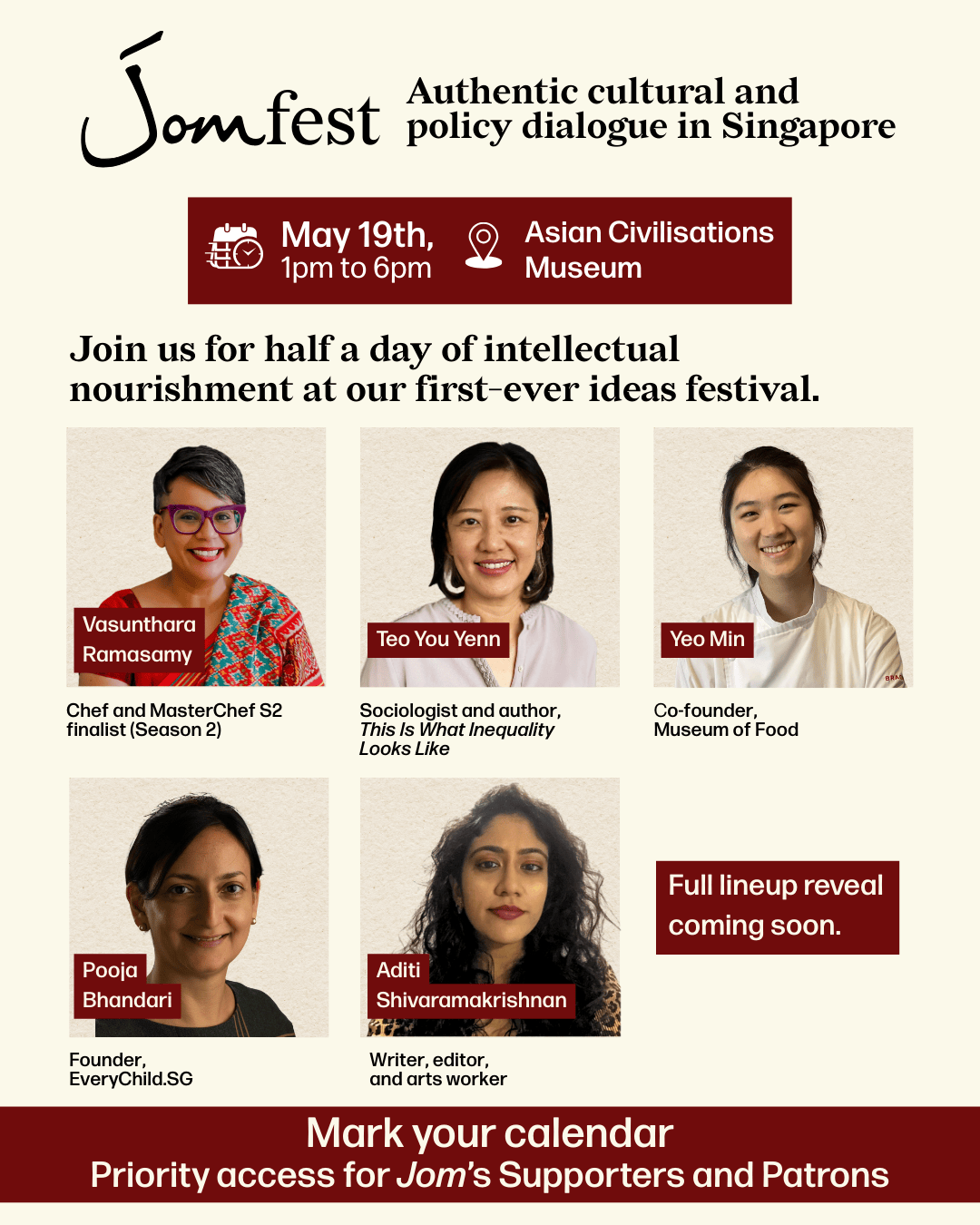
Jomfest, 1-6pm, May 19th, Asian Civilisations Museum (ACM). Save the date, take leave, hire the dogwalker. Our first-ever half-day jam is happening. Over the past two weeks, we’ve raised the funds for this (thank you, dear donors), and we’ve just confirmed our booking at ACM. More details to follow.
Join 2,000 members keeping Jom independent. From S$10/month—full access, no compromises.
“Everyday economics: What the fruit uncle knows”, by Serene Koh
Recall that Serene’s first three columns (see below) were a trilogy about, as she put it to me, the psychology inside our heads—how we think, mis-think, and justify ourselves in everyday life.
The next three, which started with last month’s hawker centre piece, is about how societies perform behavioural work through space, norms, and systems, as told through ordinary, Singaporean places.
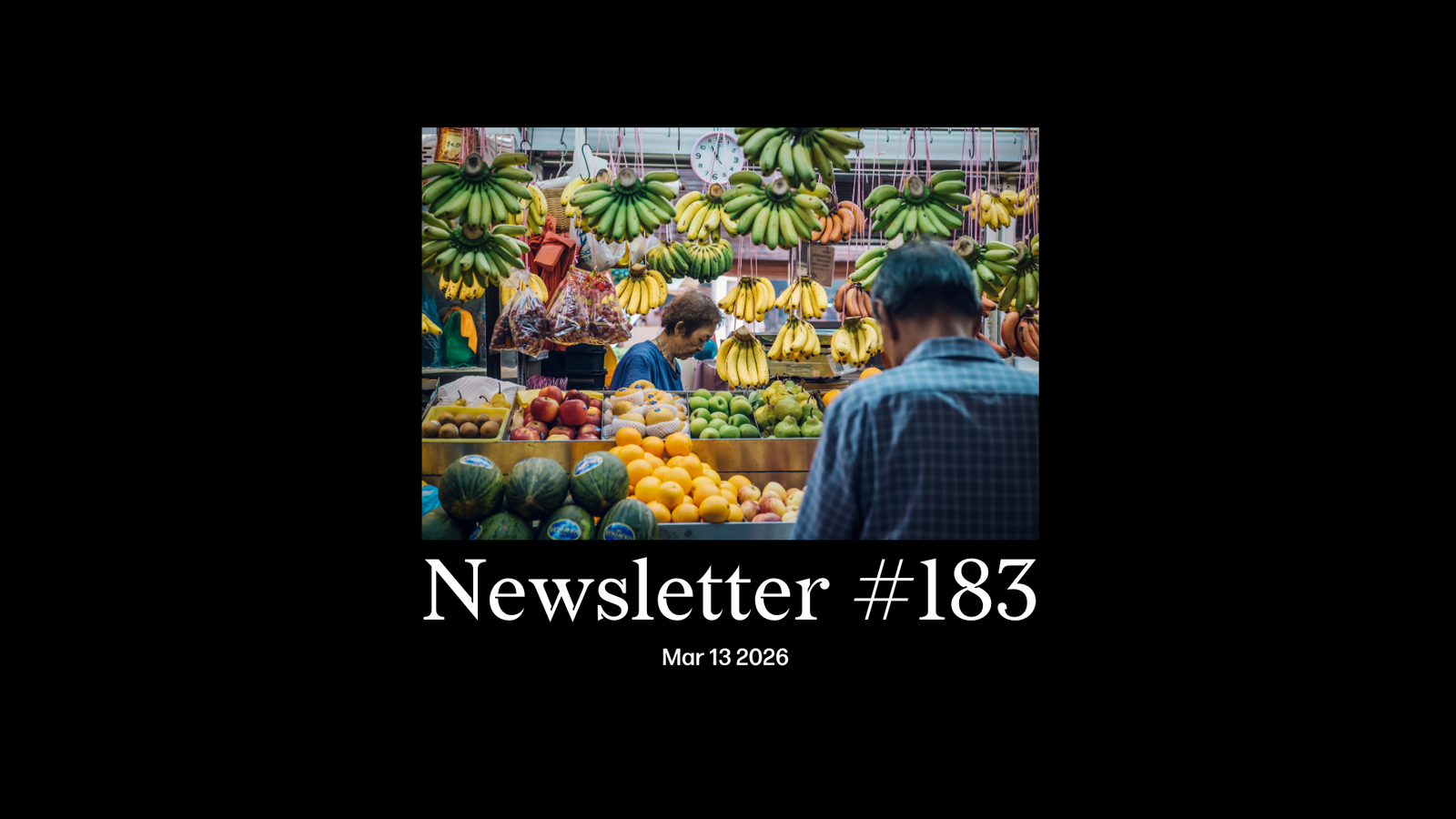
And this brings us to that cherished Singaporean character, the fruit uncle in the wet market.
“Confession: I don’t know how to pick a ripe mango. And I can’t tell if Korean pears are sweeter than Chinese ones, or whether firmer plums are tastier than softer ones.
But the fruit uncle at my neighbourhood wet market does. So every Sunday, he wraps up an already skinned and trimmed pineapple before I even ask, tells me what else is good, and I trust him.
Part of it is fatigue—it’s always my last stop and by then, I’m done thinking. I’ve already negotiated vegetables, chosen cuts of meat, and tried to make sense of fish I don’t quite recognise (snapper and seabass fillets look exactly the same to me). I don’t think I have the bandwidth left to also divine which mango is the sweetest.
Mostly though, I just don’t know enough.
But Uncle does.
And he’s been right often enough that I’ve stopped second-guessing him. After years of going to the wet market, you’d think I would have learned how to pick a ripe mango on my own. But I haven’t; I’ve learned something more useful: who to ask.”
Read on for Serene’s take on shopping at supermarkets, through delivery apps, and the behavioural underpinnings of each. And whether it’s your fruit uncle or bus uncle, it’s an appropriate week, amidst all the uncertainty in the world, to reestablish connections not just with your close friends, but the so-called “weak ties” that are essential to our social fabric.
Jom ngobrol,
Sudhir Vadaketh, editor-in-chief
Jom
Jom on everyday economics
 Serene Koh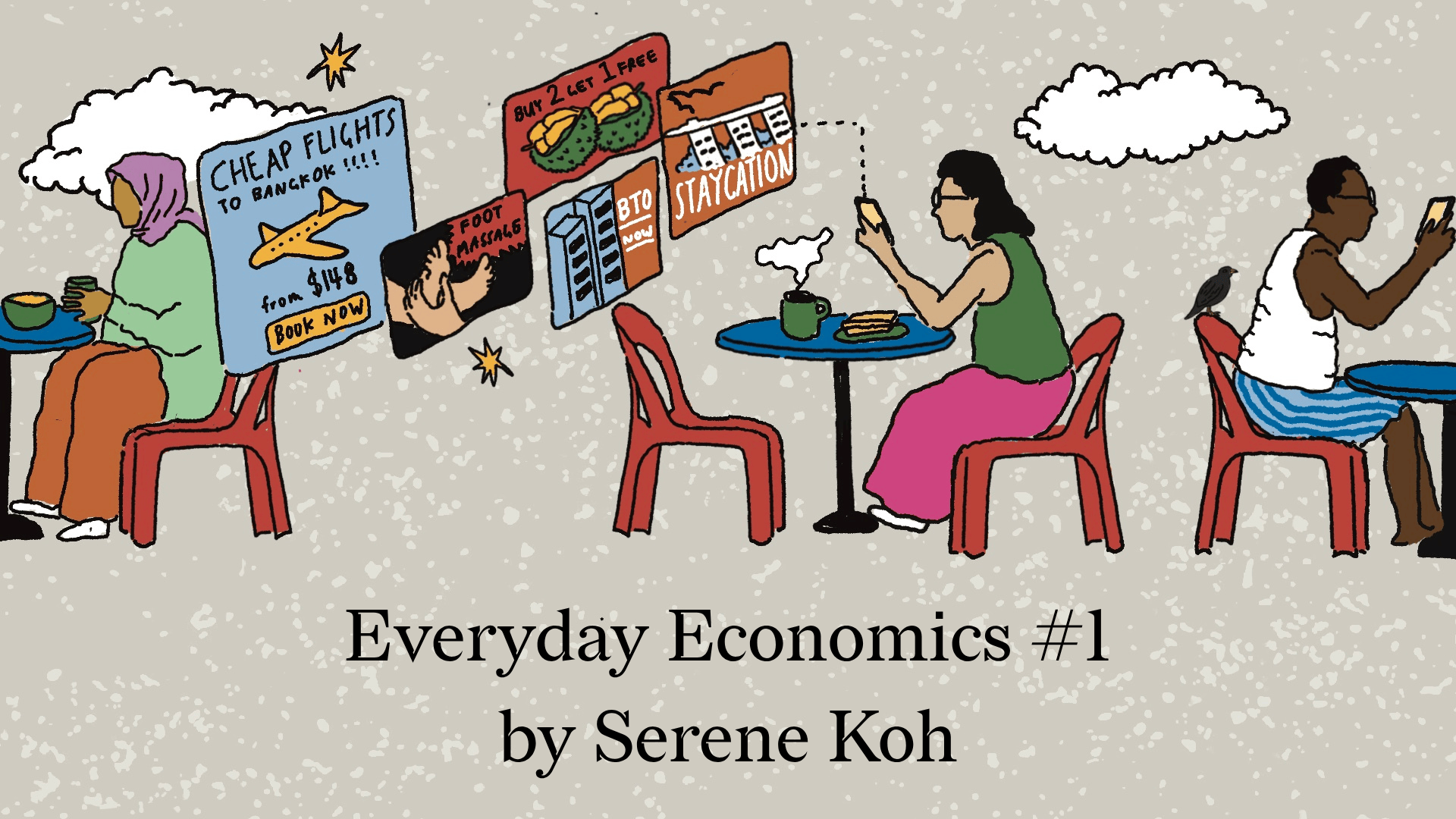
 Serene Koh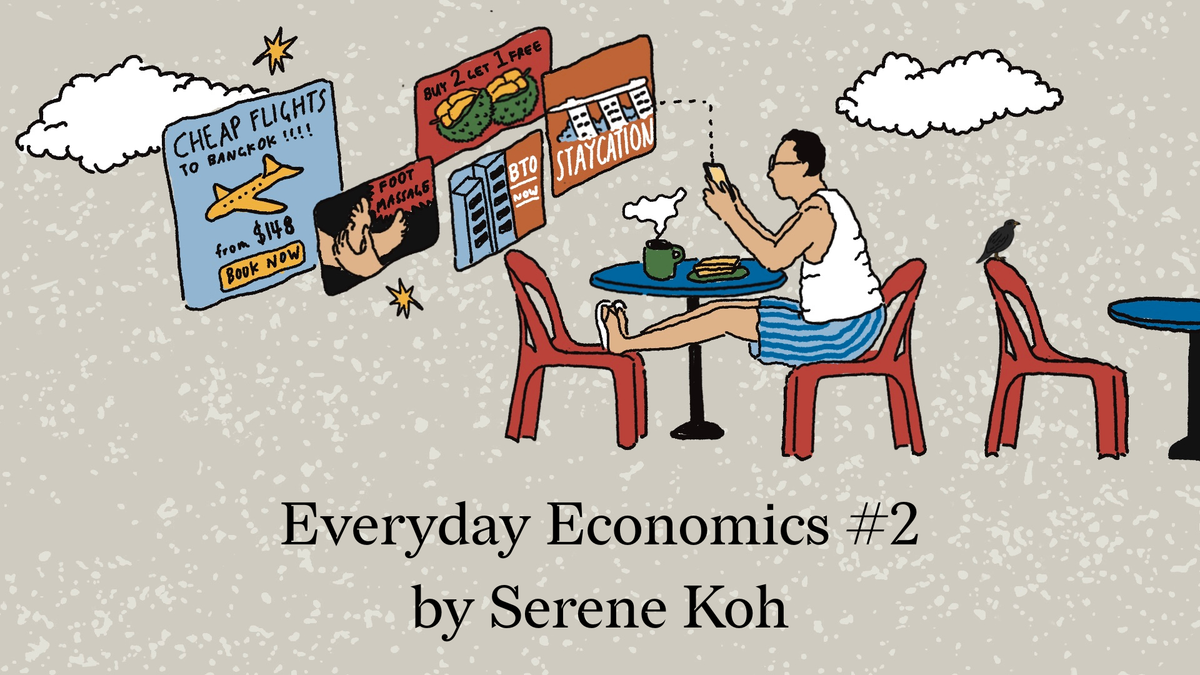
 Serene Koh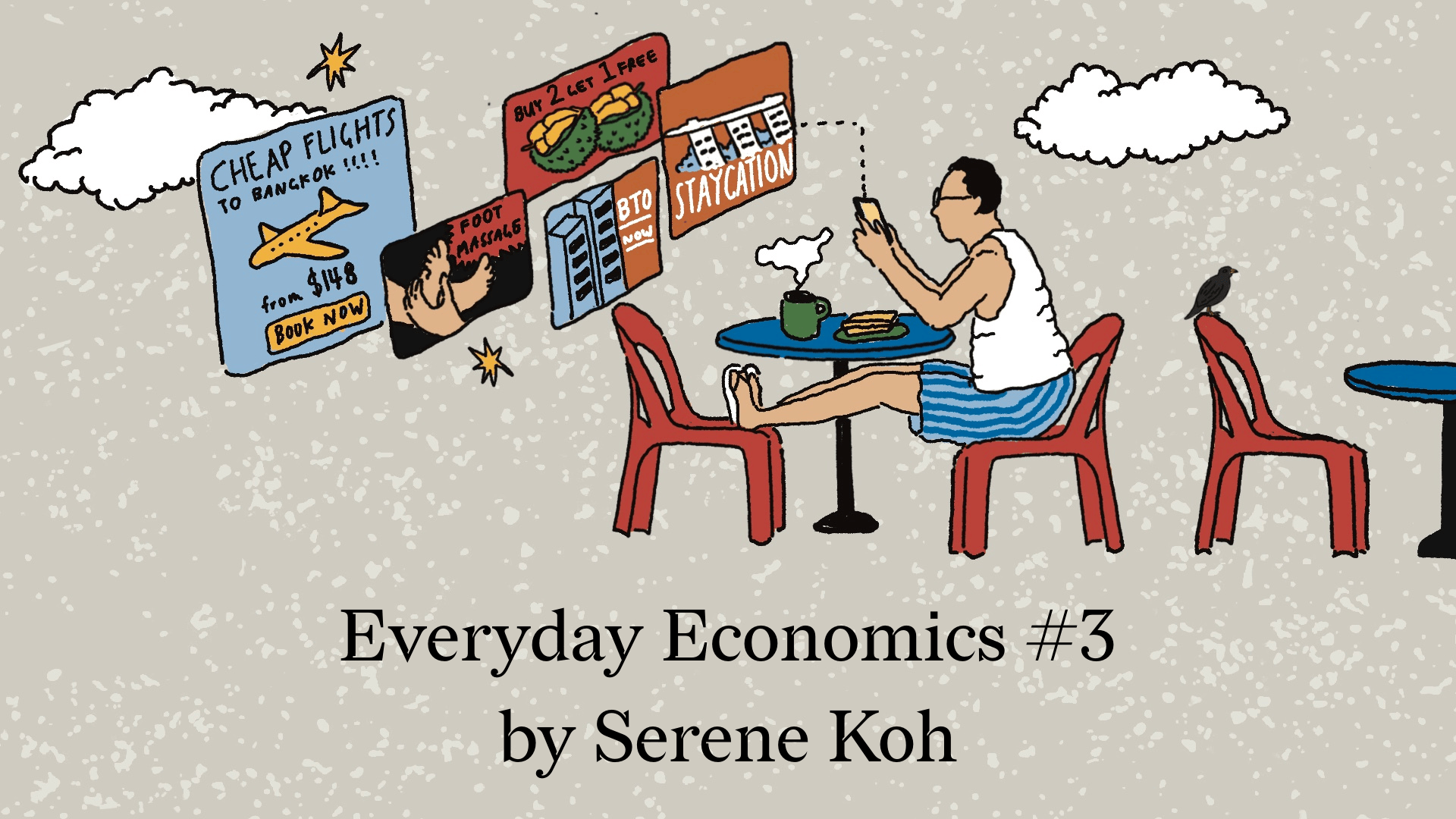
 Serene Koh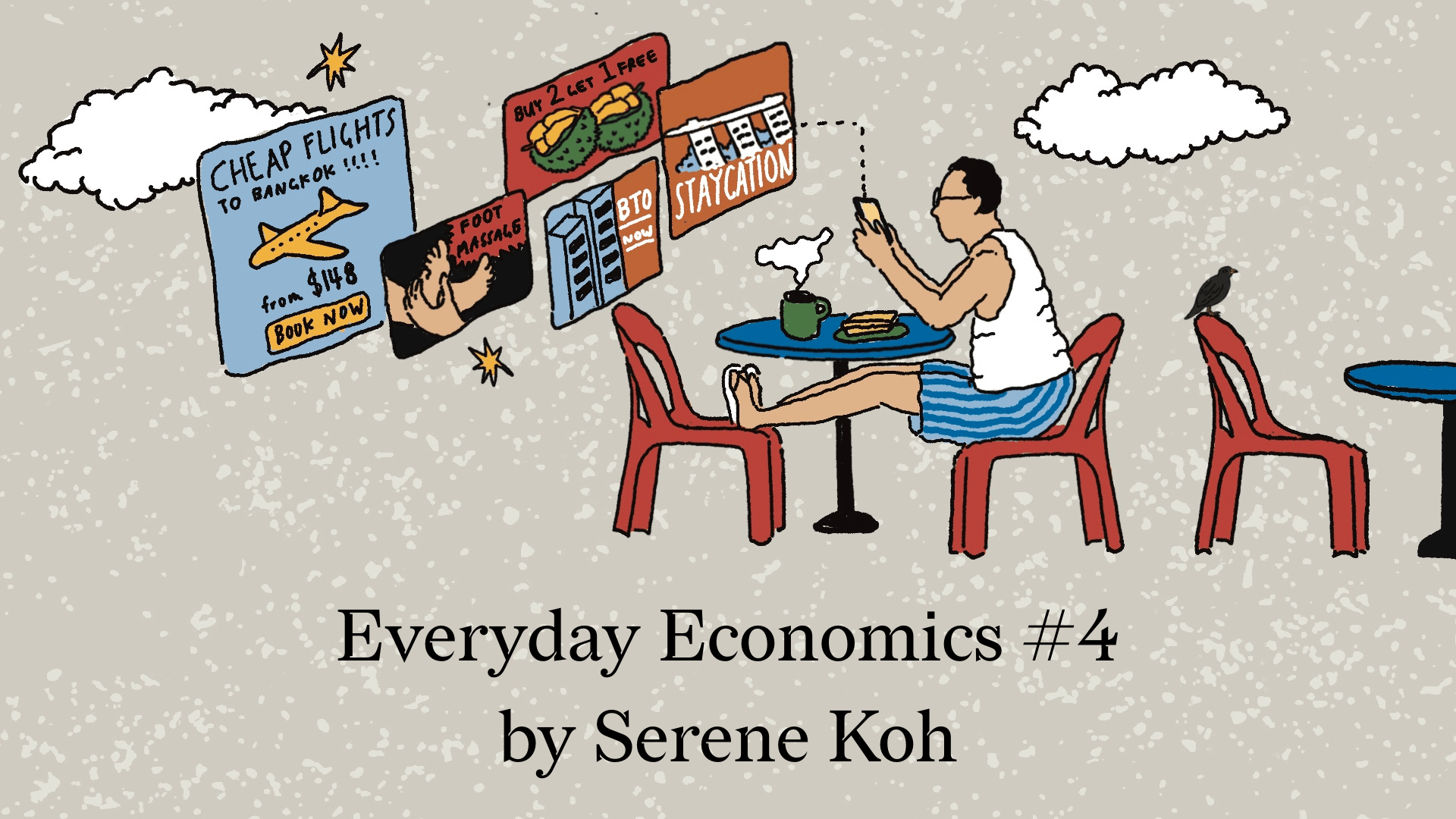
Singapore This Week
History Weekly with Faris Joraimi

Syed Muhammad Naquib al-Attas, Malaysian thinker and scholar, passed away last week at the age of 94. The geographic span of condolences—from Europe and the Middle East to South- and South-east Asia—reflect the global contributions to contemporary Islamic thought by the late “royal professor” (a title granted to only one other Malaysian, his cousin Ungku Abdul Aziz). Born in 1931 in the mountain town of Bogor in Dutch-ruled Java, al-Attas was a member of the Ba’ Alawi sada, a group of families with origins in the Hadhramaut valley of south Arabia who fanned out across the Indian Ocean over hundreds of years, marrying locals, trading, becoming court advisors, and rulers. As descendants of the Prophet Muhammad, they gained fame and fortune in the Malay world through their participation in politics and commerce, but were later maligned in the 20th century by colonial authorities and nationalists who considered them suspicious outsiders. (Singapore’s most prominent Muslim shrine, Makam Habib Noh, and the Baalwie mosque in Bukit Timah, are both affiliated with the Ba’ Alawi, and continue to attract pious congregations from the region.)
In world war two, al-Attas was taken in by his uncle Onn Jaafar, the founder of UMNO. At Onn Jaafar’s residence, al-Attas designed the flag of the party that would dominate Malaysian politics until 2018. While an undergraduate at the University of Malaya in Singapore, al-Attas produced his first major publication, a Malay translation of works by Omar Khayyam, an 11th-century Persian poet. Taught by leading orientalists of the day, al-Attas’s initial scholarship focused on the history of Malay literature and Islamic philosophy in South-east Asia. In response to the overwhelming dominance of the Western secular intellectual tradition, he developed his most consequential—and controversial—ideas, calling for a turn to foundational concepts about the nature of Man, reality, existence, and knowledge as theorised in Islamic philosophy. There’s no space here to do justice to their full complexity.
Al-Attas’s impact on the politics of culture and religion in contemporary Malaysia, however, is hard to deny. His critics have accused him, among other things, of providing intellectual cover for the degradation of secular values and the rise of religious conservatism among Malaysian Muslims. The idea of “progressive Islam”, promoted by the sociologist Syed Hussein Alatas, his brother, offers a counterpoint. (Hussein Alatas’ classic work, The Myth of the Lazy Native, argued that the stereotype of the “lazy Malay” was invented to serve colonial capitalism). In very different ways, both siblings mounted responses to colonialism, shaping our language and ways of thinking. A young Anwar Ibrahim, however, came of age in the 1970s, enthralled by al-Attas. The latter thereafter gained an institutional platform and his followers went on to occupy high positions in government. Is the question about, perhaps, how far valid critical scrutiny can also become the basis for a political programme? It’s no longer controversial for historians and anthropologists today, for example, to criticise “Western” views from the Enlightenment, such as secularism, humanism, or rationalism. But there are no easy answers to how those critiques should translate to policy and public life.
Some further reading: “Naquib Al-Attas’ Islamization of knowledge: Its Impact on Malay Religious Life, Literature, Language and Culture” by ISEAS; and a tribute by Cat Stevens.
Other stuff we like
Donate to the Singapore Fringe Festival. The crowdfunding campaign ends on March 31st. With only 12 percent of their target fund of S$80,000 raised thus far, Fringe 2027 is at risk of being cancelled.
Peregrine falcon nanny cam. For the past week, the squat, fuzzy chicks of the world’s fastest animal, tucked away on a 34th-storey ledge of OCBC’s Raffles Place headquarters, have made Singaporeans swoon. The bank’s given the new family a S$30,000 “baby bonus”: funding for eDNA collection and sampling so researchers can identify the falcons’ prey.
A flavour of Jom. Occasionally, Jom publishes essays outside the paywall. These are on issues we think are in the public interest, and deserve a wider airing. In the past two years, we have published nearly 50 such pieces. Read some of these if you’d like to see samples of our work. We hope they’ll convince you to subscribe. And even if you’re here with no intention of doing so, we hope you’ll enjoy these offerings and consider it time well spent!