
Dear reader,
Today we’ve published:
- “Singapore This Week”, by Jom
- “The AI will see you now”, by Nicole Chan
News that caught our eye this week: “job hugging”, as fewer Singaporeans changed jobs in 2025; a great atmospheric science explainer in The Straits Times about Cyclone Senyar, which has devastated the region; the “clearance” of over 52ha of forest and streams near NTU to expand the Jurong Innovation District; new Singaporean consulates in Sabah and Sarawak the highlight of the MY-SG leaders’ retreat; and this year’s Cultural Medallion winners.
My colleague Abhishek has written a fab blurb about the new US ambassador’s bizarre comments about Singapore, one of several issues we chose to explore in more depth.
- Is Singapore indebted to the US, in the way Anjani Sinha claims?
- Pritam Singh, and the conclusion of Raeesahgate
- What are some new treatments for mild depression?
- South-east Asia’s winds, and our new embassy in Mexico
- What’s behind the rise of rough sleepers?
- The Living Earth Festival, Green Stages, and artistic interdependence amidst the climate crisis
Join the over 2,000 paying members now to get access to all our content, starting from just S$10 a month.
Essay: “The AI will see you now”, by Nicole Chan
“Healing through words”. Such language appeared in ancient Egyptian and Greek writings over 3,500 years ago, though arguably oral storytelling traditions long before also served some therapeutic purpose. Modern psychotherapy can be traced to the 19th century, and the science has accelerated dramatically since.
I’ve witnessed rapid change in my lifetime. In the 1990s, teacher counselling was the closest thing teenage kids, grappling with the feverish pressures of growing up here, had easy access to. There certainly was a stigma attached to those who sought professional help outside. But in recent years, certainly amongst my younger, more privileged colleagues and friends, “therapy” has become so normalised that those who don’t go for it can sometimes look like the outcasts. Are you sure you’re living your best life?
Stigma still exists, of course, in many circles here and around the world. And today, heralding a completely new evolution in the discipline, people have a far more private way of seeking help: the AI therapist. Nicole Chan, a writer who “unpacks the intersections of culture, identity, and modern work through a South-east Asian and Gen Z lens”, helps us make sense of this technology, and the forces driving it.
“Open AI’s data shows that college-aged adults harness the company’s tool to study, seek relationship and medical advice, process emotions, and make decisions. Sam Altman, OpenAI CEO, said users can benefit from ChatGPT’s memory function, which remembers past conversations and offers continuity: ‘It has the full context on every person in their life’. This can stimulate the familiarity of being seen and known; remembering a bad week, a breakup, or a childhood trauma. Psychological researchers call it a ‘machine-mediated parasocial bond’, a relationship that feels mutual and interactive, even though only one side is real.”
I watched “Her” in 2013. Between Joaquin Phoenix’s sentimental, tortured portrayal of the lead, and Scarlett Johansson’s recognisable, sultry voice as his AI girlfriend, I remember feeling somehow both comforted and totally freaked out at the possibility, wondering how long it’d be.
I’m grateful to Nicole for her exhaustive exploration of the topic. I still feel a little unsure and scared about it, which is credit to the breadth of her work. It seems like we’re just on the cusp. Read it now, and reply to let us know your own thoughts about AI therapists.
Jom fikir,
Sudhir Vadaketh, editor-in-chief
Jom
Behind Jom’s art with Charmaine Poh
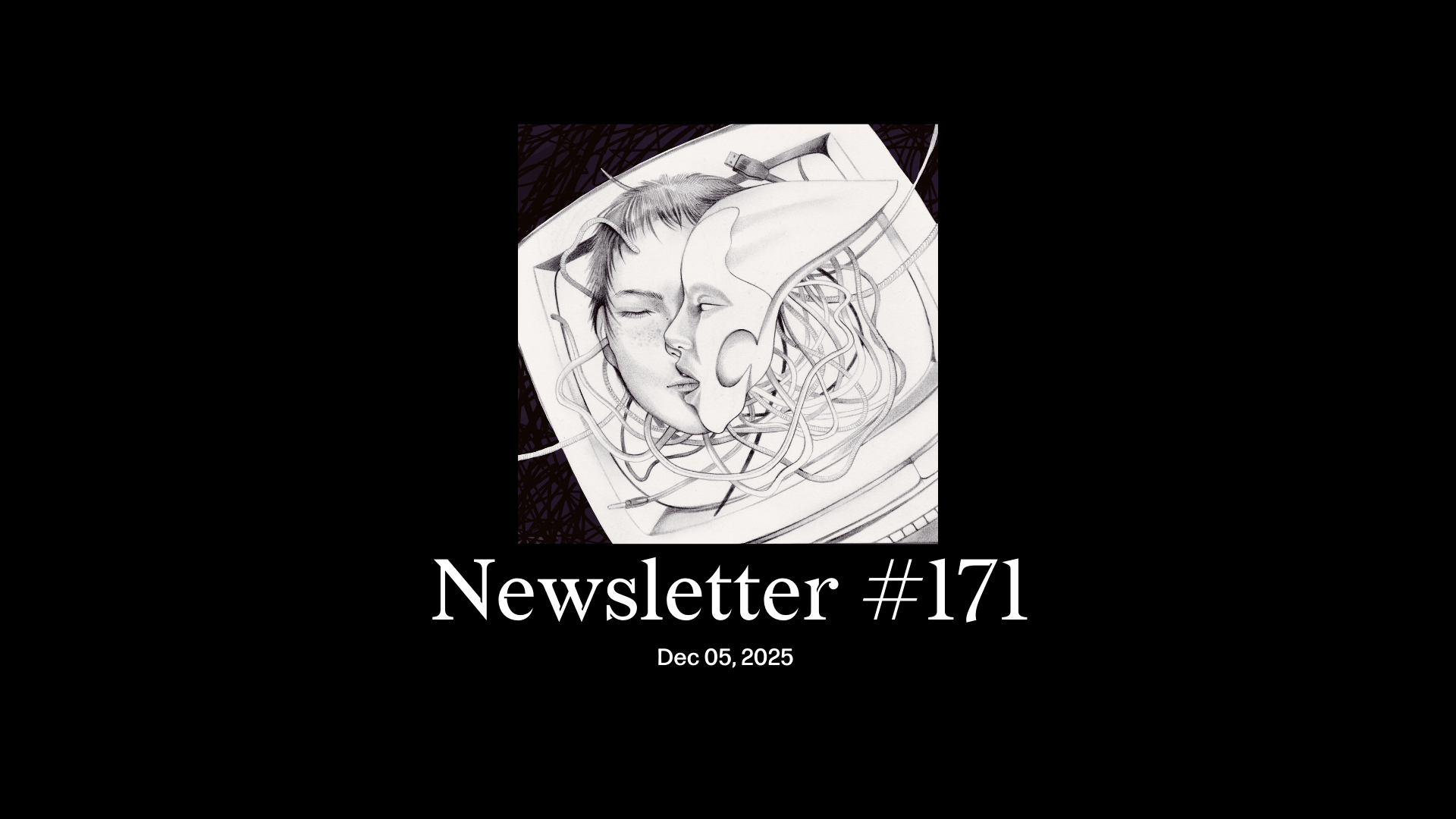
First time visuals contributor Anna Du Toit lends her surreal ballpoint ink aesthetic to this week’s essay on the dangerously misleading intimacies that AI chatbots offer. In the header image, a parent is seen in a bedroom doorway, looking on helplessly as their child is entranced by a Medusa-like figure with cables instead of snakes for hair. Is it a monster or is it technology? In this age, perhaps both. In the spot illustration, Anna then explores the collapsing of self and device, with two faces stuck in an embrace. The line between humanness and the rapidly evolving artificial intelligences around us has never been blurrier. Anna’s illustrations are a sobering depiction of this.
If you’ve enjoyed our newsletters, please scroll to the bottom of this page to sign up to receive them direct in your inbox.